
47K
Downloads
534
Episodes
Beyond the Headlines, an in-depth, one on one conversation on the issues shaping our future.
Episodes
Friday Jan 08, 2021
Friday Jan 08, 2021
Oct 30, 2020
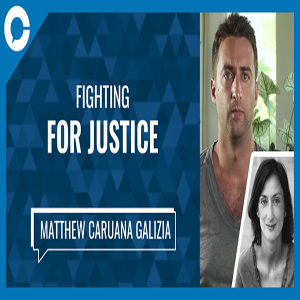
Ep 322 - Fighting for Justice
Guest: Matthew Caruana Galizia
In the afternoon hours of October 16th in Bidnija, Malta, the car of investigative reporter Daphne Caruana Galizia was ripped apart by a powerful bomb. “My mother had to go to the bank, she left the house and then I heard the explosion,” said Matthew Caruana Galizia in an interview for the Allard Prize for International Integrity. His mother was a fearless Maltese journalist who was assassinated for ceaselessly uncovering corruption in her country. Her car was found more than a city block from the ignition point of the blast. It was a powerful message to anyone who dared to expose corruption at the highest level in Malta.
When the Panama Papers were released, Caruana Galizia traced millions of dollars back to the power elite in Malta. Despite increasing intimidation and threats, she dug into the details of the money and who was behind it. Her blog was extremely popular and had subscription rates that eclipsed the major media outlets in the country.
Matthew says, “Journalists in Malta were expected to cover up for powerful people, to partake in the culture of silence, and my mother refused to do that. This put her in an ultra minority.” Fellow Maltese blogger Manuel Delia says, “When political parties are threatened by a journalist, they will isolate them, dehumanize them. In the case of Daphne, they will demonize her.” In an interview Daphne said, “They have made me into what is in effect a national scapegoat.”
Daphne Caruana Galizia is the posthumous co-winner of the Peter A. Allard Prize For International Integrity, which was awarded in Vancouver on October 21, 2020. We invited her son Matthew to join us for a Conversation That Matters about the unveiling of corruption and the high price Daphne paid for her brave pursuit of the truth.
Conversations That Matter is a partner program for the Morris J Wosk Centre for Dialogue at Simon Fraser University. The production of this program is made possible thanks to the support of the following and viewers like you.
Please become a Patreon subscriber and support the production of this program, with a $1 pledge https://goo.gl/ypXyDs
Friday Jan 08, 2021
Friday Jan 08, 2021
Nov 13, 2020
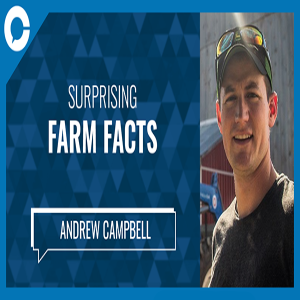
Ep 321 - Surprising Farm Facts
Guest: Andrew Campbell
Did you know that more than 95% of farms in Canada are family-run operations? Families that have been working the land for three and four generations. You probably have little or no reference to the world of farming. I didn’t.
Andrew Campbell does. He’s a third generation dairy farmer and he’s also a storyteller, to which he says “is an unusual combination because most farmers work the farm for a reason. They really like Mother Earth and all of its inhabitants. They have been content doing their jobs with little fanfare. In a world of social media and environmental campaigns, that is not a good idea.
Farming is under the microscope from a variety of different constituencies that include (but are not limited to) consumers, regulators, politicians and activists. Campbell says, “If we don’t share our stories – the real stories of farming – then someone else is going to and they are going to get it wrong.”
Campbell operates a dairy farm in Southern Ontario and he is also out telling the story of farming. One year, he challenged other farmers to join him and post a photo a day online. Then he took a huge leap forward and produced 52 did-you-know videos about farming called “Dinner Starts Here,” where he took viewers onto 52 farms across Canada.
Fresh Air Media, his production company, continues to produce videos and podcasts because Andrew Campbell says farmers need to be heard as the food production authorities they are.
I invited Andrew Campbell to join me for a Conversation That Matters - Food For Thought about food production from the farmer’s perspective.
Conversations That Matter is a partner program for the Morris J Wosk Centre for Dialogue at Simon Fraser University. The production of this program is made possible thanks to the support of the following and viewers like you.
Please become a Patreon subscriber and support the production of this program, with a $1 pledge https://goo.gl/ypXyDs
Friday Jan 08, 2021
Friday Jan 08, 2021
Nov 6, 2020
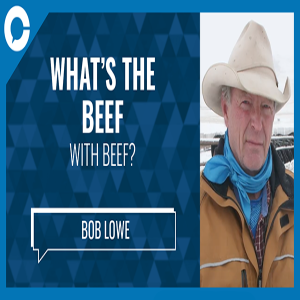
Ep 320 - What’s the Beef with Beef?
Guest: Bob Lowe
There is a growing portion of Canadians who have a beef with beef. The belief appears to be that beef is bad for humans and cattle are bad for the environment and the atmosphere. In fact, according to the Canadian Centre for Food Integrity, one-third of us are negative about food production in Canada and another third are losing faith in the system.
Beef is front and centre. There are incorrect arguments that suggest we could eliminate cattle and substitute it with plant-based protein and in doing so, we’d all be better off and so would the environment. Bob Lowe, the President of the Cattlemen’s Association has heard it all and he says, “It simply isn’t true. In fact, if you take cattle off of the grasslands, then those grasslands and the thousands of species that call them home will die.”
He’s right – science has demonstrated that large grazing ruminants are essential to the health and well-being of grasslands. Cows graze, they turn over the soil and their saliva, urine and poop fertilize the land. When they chomp on the grasses that, in turn, stimulates growth.
What they are eating is sequestered carbon and they then convert those grasses into protein-rich nutrients. They also eat corn and barley and potatoes that are not fit for human consumption and they convert those carbon based organisms into protein and in the process reduce food waste.
And then there is their place in the flow of carbon. Cow burps are the by-product of carbon conversion that happens in their bodies, which is then emitted as methane which eventually returns to carbon and is once again sequestered in the vegetation the cows eat.
I invited Bob Lowe, the President of the Cattlemen’s Association to join me for a Conversation That Matters about the vital role cattle play in our well-being and the well-being of the environment.
Before we get to that conversation, here is an excerpt from the documentary “Guardians of the Grasslands”
Conversations That Matter is a partner program for the Morris J Wosk Centre for Dialogue at Simon Fraser University. The production of this program is made possible thanks to the support of the following and viewers like you.
Please become a Patreon subscriber and support the production of this program, with a $1 pledge https://goo.gl/ypXyDs

Sunday Nov 01, 2020
Sunday Nov 01, 2020
Ep 319 - Blowing the Whistle on Danske Bank
Guest: Howard Wilkinson
He is the man who blew the whistle on the largest money laundering case in history. Howard Wilkinson uncovered and exposed an international money laundering scheme that reached all the way to the Russian secret police, which included relatives of President Vladimir Putin. More than 230 billion euros passed through bank accounts at the Danske Bank in Estonia.
Wilkinson reported his suspicions to senior officials at Danske Bank – to which he was let go, muzzled, and paid off. His report, while not acted upon at the time, has come to light and he says, “Charges have been laid against 12 former bankers in Estonia and another 10 Danish bankers have been served with preliminary charges.” The scandal has rocked the financial world in Europe and the US, where the Securities Commission and the Department of Justice are carrying out investigations.
Wilkinson is the co-winner of the Peter A. Allard Award For International Integrity, which was awarded in Vancouver on October 21, 2020. We invited Howard Wilkinson to join us for a Conversation That Matters about the unveiling of the largest money laundering scheme in the world.
Conversations That Matter is a partner program for the Morris J Wosk Centre for Dialogue at Simon Fraser University. The production of this program is made possible thanks to the support of the following and viewers like you.
Please become a Patreon subscriber and support the production of this program, with a $1 pledge https://goo.gl/ypXyDs
Sunday Nov 01, 2020
Sunday Nov 01, 2020
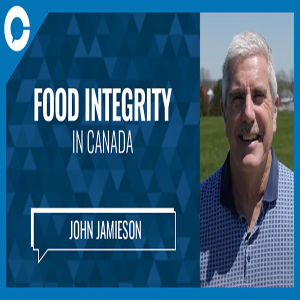
Ep 317 - Food Integrity in Canada
Guest: John Jamieson
There is only one thing you do more often than eat, and that is breathing. Food is vitally important to your well-being, your lifestyle and your ability to work. “In Canada, we are extremely fortunate,” says John Jamieson of the Canadian Centre for Food Integrity. He goes on to say, “The average Canadian grocery store has 50,000 items in it. We have tremendous choice and we know that food is safe to consume.”
Despite the robust nature of our food system, the CCFI, in its 2019 Public Trust Research survey, found that only one in three Canadian consumers believe Canada’s food system is headed in the right direction and another large segment of the population isn’t sure.
How can this be? Canada not only feeds itself, it also exports in excess of $57 billion of food annually to countries around the world. Jamieson says, “Those countries boast about Canadian food as a benchmark in quality and yet we are seeing a disconnect here at home.”
Jamieson says, “Agriculture today is based on science and technology. We are able to produce more per acre. We're able to feed more people per acre because we do a good job of what we do and we use the tools that are available to us and it's very safe. There's so many checks and balances. There are inspectors at every step along the way. Industry associations have codes of practice and processors have regulations and requirements they must follow.”
We invited John Jamieson, the CEO of the Canadian Centre for Food Integrity to join us for a Conversation That Matters about the safety and integrity of Canada’s food supply.
Conversations That Matter is a partner program for the Morris J Wosk Centre for Dialogue at Simon Fraser University. The production of this program is made possible thanks to the support of the following and viewers like you.
Please become a Patreon subscriber and support the production of this program, with a $1 pledge https://goo.gl/ypXyDs
Sunday Nov 01, 2020
Sunday Nov 01, 2020
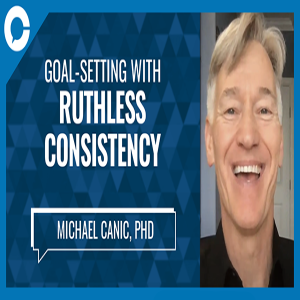
Ep 314 - Ruthless Consistency
Guest: Michael Canic, PhD
It’s not uncommon to believe you have the will to win. Most of us want to come out on top. It’s a nice idea, one that really gained acceptance with the “believe it and you can achieve it” movement that sprang forth from California in the 1980s. It was as if all you had to do was think and believe, and it would come to be because you were attracting the right energy.
Not so fast, says Michael Canic, a human performance specialist and author of a new book titled “Ruthless Consistency.” Canic says, “A lot of people say they have the will to win but do they have the will to do what is needed to win?” In other words, are you willing to work long enough, hard enough and make the sacrifices to win?
Muhammad Ali said, “I hated every minute of training, but I said, ‘Don’t quit. Suffer now and live the rest of your life as a champion.’” Canic agrees. He says most change initiatives – be they personal, professional or organizational – fail. Why? “The reasons are many and they are complex,” says Canic. Foremost amongst them is a lack of consistency.
Canic says, “You may think you’re consistent but you can’t see yourself the way those around you see you. You need a strategy that helps you define what you do, why you do it, [and] how you will do it. And then you have to be willing to do the work – the hard work of every day, staying on task.”
We invited human performance expert and author Michael Canic to join us for a Conversation That Matters about a shift in mindset that can propel anyone in any discipline on a path to consistency.
Conversations That Matter is a partner program for the Morris J Wosk Centre for Dialogue at Simon Fraser University. The production of this program is made possible thanks to the support of the following and viewers like you.
Please become a Patreon subscriber and support the production of this program, with a $1 pledge https://goo.gl/ypXyDs
Sunday Nov 01, 2020
Sunday Nov 01, 2020
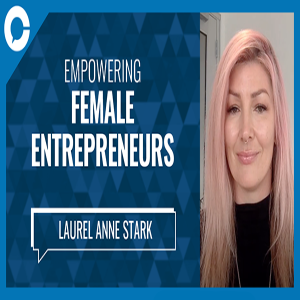
Ep 313 - Empowering Female Entrepreneurs
Guest: Laurel Anne Stark
“Self-employment should empower women to earn more money, but studies show the wage gap persists in self-employment and it’s even worse in the gig economy for many entrepreneurial women. Regardless of parity in education, work experience, number of hours worked or occupation, women earn less than men in self-employment,” says Laurel Anne Stark, an entrepreneur and co-author of a new report on the State of Female Entrepreneur Mental Health.
Key to understanding the reasons why women face unique challenges lies in their motivation to start a business. For women, many (if not most) have to start a business because they have few employment choices. Women tend to be entrepreneurs of necessity, which means they were victims of a system that didn’t compensate them appropriately, didn’t promote them, their work-life balance was off-balance or they were harassed – to name but a few of the reasons for going out on their own.
The good news is that research shows women are uniquely suited to entrepreneurship. They are adept at understanding the needs of others, which is essential in the development of strong client relationships. As well, Stark says, “Their potential is enormous given their ability to succeed and exceed the profitability of many companies created by men, despite the crippling barriers they face.” One such barrier is access to capital. Stark says, “The harsh reality is, women simply do not have the same access as men do to financing.”
While launching an enterprise ought to provide protective factors for women such as increased control over work schedules and a better work life balance, it does not alleviate the concerns that motivated women to start a business. Stark says, “Our research shows self-employment does not provide relief from gender bias, the gender pay gap, workplace harassment or the other stressors unique to women.” Add it all up and female entrepreneurs burn out more frequently and are significantly more likely to encounter mental health challenges than their male counterparts.
I invited entrepreneur Laurel Anne Stark to join me for a Conversation That Matters about empowering female entrepreneurs with the resources needed to support a vital sector of our economy.
Conversations That Matter is a partner program for the Morris J Wosk Centre for Dialogue at Simon Fraser University. The production of this program is made possible thanks to the support of the following and viewers like you.
Please become a Patreon subscriber and support the production of this program, with a $1 pledge https://goo.gl/ypXyDs

Sunday Nov 01, 2020
Sunday Nov 01, 2020
Ep 312 - Reclaiming Power and Place
Guest: Marion Buller
“Persistent and deliberate human and indigenous rights violations and abuses are the root causes behind Canada’s staggering rates of violence against indigenous women, girls and Two-Spirited people.” This is stated in the final report of the National Inquiry into Missing and Murdered Indigenous Women and Girls. The numbers are horrible: indigenous women, girls and Two-Spirited individuals are 12 times more likely to experience violence and seven times more likely to be murdered.
Chief Commissioner Marion Buller says, “The inquiry was gut wrenching. It was difficult to hear the stories of survivors. However, those stories needed to be told, they needed to be heard, and they needed to be recorded.” The final report contains the truths of more than 2,300 family members, survivors, experts and traditional knowledge keepers that were shared over the two-year mandate of the inquiry.
There are 231 calls for justice in the final report: calls for justice that are directed at all Canadians and at every level of government, for First Nations through to the federal government – calls for justice that some feel will go unheard. Buller disagrees. “The act of acknowledging and recording the truths of victims' families, survivors and others raises awareness and that [in] its very nature instigates change: change that takes time, but change that has already begun. One of the lessons I have learned working in the justice system is that real change has to happen at the grassroots.”
We invited MMIWG Chief Commissioner Marion Buller to join us for a Conversation That Matters about the path forward in reducing harm and violence afflicting indigenous women, girls and Two-Spirited people.
Conversations That Matter is a partner program for the Morris J Wosk Centre for Dialogue at Simon Fraser University. The production of this program is made possible thanks to the support of the following and viewers like you.
Please become a Patreon subscriber and support the production of this program, with a $1 pledge https://goo.gl/ypXyDs
Sunday Nov 01, 2020
Sunday Nov 01, 2020
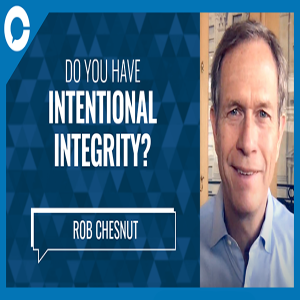
Ep 311 - Intentional Integrity - Do you have it?
Guest: Rob Chesnut
Are you honest in all you do? Do you have integrity? You’d probably like to think you are. The reality is like most of us, you may be soft around the edges. You might hold back the truth a little here and a bit there. It’s easy to justify that you’re doing so because you have your eye on the bigger picture.
And if you cheat a little here and little there, you do so in the belief that you know where to draw the line. Small things unfortunately lead to bigger things and they shift because what was unacceptable yesterday is today’s norm. It’s like a man who is growing a beard. It started off as not shaving for a few days, then after a little while and somewhere along the way, it became a beard. It’s difficult to define that moment when it went from not shaving to a beard because it changed status due to the accumulated aggregation of change.
The same is true of lying and cheating – in communities where we know our neighbours and the store owners we buy from; in places where employers and employees know each other and their families’ impact of dishonesty is more direct. However, as we grow into a global international chain store online marketplace, buyers and sellers don’t know each other. That, in turn, makes it easier to turn a blind eye to transgressions.
Rob Chesnut has spent his career dedicated to telling the truth, first as a US Federal Prosecutor and then as the ethics lead at major online organizations in the sharing economy. Chesnut, in his new book “Intentional Integrity,” asks and answers questions like, “Are these platforms enabling new flexible ways of working that unlock human potential, or just enabling large companies to exploit ‘gig’ workers by avoiding employment laws?”
We invited Robert Chesnut, the author of Intentional Integrity to join us for a Conversation That Matters about integrity, the challenges of being a person of integrity and why it is vitally important that we demand it of ourselves and others.
Conversations That Matter is a partner program for the Morris J Wosk Centre for Dialogue at Simon Fraser University. The production of this program is made possible thanks to the support of the following and viewers like you.
Please become a Patreon subscriber and support the production of this program, with a $1 pledge https://goo.gl/ypXyDs

Sunday Nov 01, 2020
Sunday Nov 01, 2020
Ep 310 - The First Female Recession
Guest: Chabeli Carrazana
More than 11 million women lost their jobs in North America between February and May 2020. Chabeli Carrazana explains, “The losses erased decades of job gains by women in the labour force.” She goes on to say, “About eight per cent of the women who lost their jobs stand zero chance of being called back to work.”
Heidi Shierholz, a senior economist and director of policy at the Economic Policy Institute, agrees. “There is a real possibility many jobs lost by women will never come back.” It is a shocking loss of employment and representation of women in the labour market.
According to Carrazana, “In January, when unemployment in the US was just 3.6 percent – among the lowest recorded rates in the last 60 years – women were the majority of the workforce and within weeks, that all changed.” Carrazana reports, “In 1958, women made up less than a third of the labour force. It took 30 years to reach 45 percent, a pace of growth that ushered in the most significant change in labour markets in the past century.”
The job losses cross all sectors – less so in management but even there, women were more likely to cut back or lose their job. Carrazana says, “The realities of the lopsided division of care inside homes has been on full display since the pandemic hit. Women in 2020 still take on the overwhelming majority of child care responsibilities.” And then child care facilities started to close – a double-hit. One in four women in child care lost their jobs and without child care, more women either had no choice or opted to stay at home to look after their children.
I invited Chabeli Carrazans of the 19th to join me for a Conversation That Matters about the devastating impact of COVID-19 on women and the employment realities that are crippling them professionally and financially today and for decades to come.
Conversations That Matter is a partner program for the Morris J Wosk Centre for Dialogue at Simon Fraser University. The production of this program is made possible thanks to the support of the following and viewers like you.
Please become a Patreon subscriber and support the production of this program, with a $1 pledge https://goo.gl/ypXyDs