
48.6K
Downloads
555
Episodes
Beyond the Headlines, an in-depth, one on one conversation on the issues shaping our future.
Episodes
Monday Jul 06, 2020
Monday Jul 06, 2020
May 29, 2020
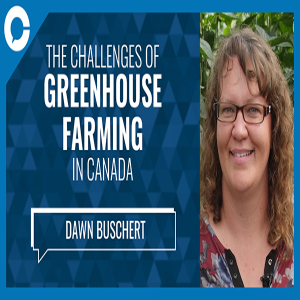
Ep 297 - Greenhouse Farming
Guest: Dawn Buschert
Fresh beautiful veggies from a well managed greenhouse are a delicious and nutritious addition to your table. Producing these vegetables is hard and detailed work. As a result, farmers need to charge more for their produce. Therein lies a significant challenge: will wholesalers support those prices? Will consumers?
In Canada, there are a number of producers who sell their products into the well established food supply system. When they sell into the system, they are competing with vegetables from California and Mexico, where they are grown in significant quantities. The price the farmer is paid fluctuates based on the market supply.
For some farmers, that price won’t support the cost of their operations, which leaves them with few options. Either they stop farming or they opt out of the system and sell directly to consumers. For some consumers, these products are highly sought after because the product is delivered from farm to table and isn’t touched by so many hands.
Farmers markets play host to a number of producers who have decided to grow, package and sell their products. It’s also a lot more work. In addition to nurturing the plants to maturity, the farmer needs to design and source packaging. They also need to complete the packing process and transport them to the market. Once there, they need to set up their site and sell. As Dawn Buschert of Shirley’s Greenhouses says, “It’s a lot of work but for us, because we are small, it is the only way we can survive financially. We can’t produce at a rate that competes with imported prices.”
We invited Ms. Buschert to join us for a Conversation That Matters about the work of operating a greenhouse in Canada and why it is important that she and others take on the arduous task of complementing the food supply system.
Conversations That Matter is a partner program for the Morris J Wosk Centre for Dialogue at Simon Fraser University. The production of this program is made possible thanks to the support of the following and viewers like you.
Please become a Patreon subscriber and support the production of this program, with a $1 pledge https://goo.gl/ypXyDs
Thursday Jul 02, 2020
Thursday Jul 02, 2020
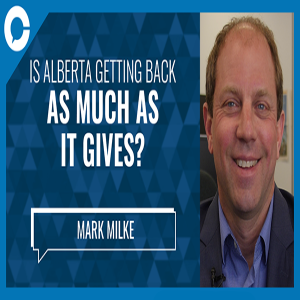
Ep 296 - Western Alienation
Guest: Mark Milke
Alberta and the prairie provinces have been hammered like everyone else by the shutdown of their economy by the coronavirus. It is another blow to an already beleaguered region. Oil and gas revenues tanked over the past few years when the price of a barrel of oil plunged.
Add in a chorus of voices, both domestically and internationally, calling for the demise of the Canadian energy sector and the current federal government’s mixed messages about the development of resources in Alberta in particular.
The combination of hits fueled feelings of alienation and growing support for separation. Premier Jason Kenny, in reading the mood of Albertans, commissioned the “Fair Deal Panel” in an attempt to get feedback on ideas that would provide Alberta with greater control of its destiny.
Then in the midst of the pandemic that is affecting the entire country, Green Party outgoing leader Elizabeth May warned the Prime Minister to not put money into supporting the oil and gas sector because, as she put it, the industry is dead.
All indications are that Ms. May is wrong. The Energy Information Administration says the demand for oil will remain strong for decades to come. Her comments and those of the Bloc Quebecois leader are one of the many elements fueling a growing interest among Albertans to leave Canada.
We invited Mark Milke to join us for a Conversation That Matters about Alberta and the western provinces’ contributions to Canada and how to find a path back to a calmer relationship. This is the first in a series of interviews focusing on alienation and a push toward separation by Alberta that will be published on the Conversations That Matter YouTube channel.
Conversations That Matter is a partner program for the Morris J Wosk Centre for Dialogue at Simon Fraser University. The production of this program is made possible thanks to the support of the following and viewers like you.
Please become a Patreon subscriber and support the production of this program, with a $1 pledge https://goo.gl/ypXyDs

Thursday Jun 18, 2020
Thursday Jun 18, 2020
Ep 295 - Investment Uncertainty
Guest: Murray Leith
The stock market plunged and now it’s rebounding. Is that an indication that the economy will do the same? Or are the markets acting in a hopeful manner? Or are they a reflection of opportunists trying to capitalize? Or not! Those who are fortunate enough to have money in investments are watching the swings and asking themselves, “What do I do?”
If you have money in the market, you may very well be asking, “Do I hang on, or do I sell this stock and buy another one? Do I get out of the market now and take a wait and see attitude?’ The questions are many and the answers are varied.
Murray Leith is the Executive Vice President and Director of Investment research at Odlum Brown’s he says, “Quality companies are essential to a well rounded portfolio, they provide stability.” However, wild fluctuations create opportunities and capitalizing on those opportunities requires an in-depth understanding of how markets function. Leith says, “There’s a real tough trade-off in markets where out-of-favour stocks sometimes get so cheap and so hated that they can do well as stocks, even while the business struggles. They can go from hated to just disliked and in doing so jump 50% in value.”
Leith goes on to say in the past, that strategy has proven to be successful. But he says, “The underlying fundamentals of the market were different then than they are now.” He says you need to have a long term strategy that takes into account the economic backdrop and what types of companies you want to invest in.
We invited Murray Leith to join us for a Conversation That Matters about the state of the investment world, its relationship to the economy and how to proceed if you are in a position to invest.
Conversations That Matter is a partner program for the Morris J Wosk Centre for Dialogue at Simon Fraser University. The production of this program is made possible thanks to the support of the following and viewers like you.
Please become a Patreon subscriber and support the production of this program, with a $1 pledge https://goo.gl/ypXyDs
Tuesday Jun 16, 2020
Tuesday Jun 16, 2020
May 8, 2020
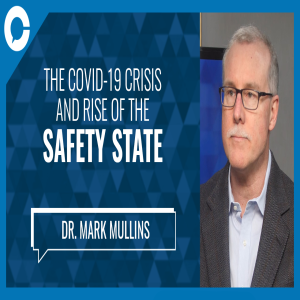
Ep 294 - The Era of the Safety State
Guest: Dr Mark Mullins
In a matter of weeks, our lives have been turned upside down. Amid one of the strongest financial rallies ever, suddenly everything changed when it became clear the coronavirus was spreading around the world, killing hundreds of thousands of people. As of May 5, 2020, “Worldometer” reports that more than three million cases have been reported and 253,000 people have died.
The spread of the virus also spread fear. That fear may, in the short term and likely into the long term, be even more significant than the virus itself, according to Dr. Mark Mullins of Veras Inc., an expert on global markets, macro investing and public policy. “In the same way that 9/11 was a one-day event that triggered an endless global war on terrorism and the rise of the security state,” Mullins says, “the social and political response to the pandemic is ushering in the era of the safety state - a fundamental change and a response to today’s complete breakdown of social trust and stability.”
Mullins goes on to say, “The crisis moment will dissipate with time but the safety state will continue, bolstered by permanent policy actions and the barnacle-like development of new institutions, technologies, and social habits.”
We invited Dr. Mark Mullins to join us for a Conversation That Matters about the shape of our world during and after this once-in-a-century public health crisis and how the aftershocks will last much longer than the virus.
Conversations That Matter is a partner program for the Morris J Wosk Centre for Dialogue at Simon Fraser University. The production of this program is made possible thanks to the support of the following and viewers like you.
Please become a Patreon subscriber and support the production of this program, with a $1 pledge https://goo.gl/ypXyDs
Monday Jun 15, 2020
Monday Jun 15, 2020
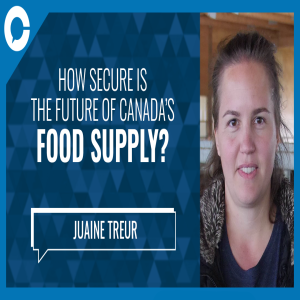
Ep 293 - In Udder News
Guest: Julaine Treur
Over the past 70 years, there has been a silent exodus from farming in North America. In the United States, the number of farmers fell from 30 million to less than 3 million between 1950 and 1980. The reasons are many: the allure of the city, the bone numbing and exhausting work in an ever and challenging landscape, crop failures, weather conditions, poor market prices, lack of access to farm workers.
Today, we may be witnessing a small and slow reversal of that trend - a trend that, in part, is motivated by dedicated farmers like the Truer family. “We love it,” says Julaine Treur. “Farming was in my blood, it was in my husband’s blood but our families had moved away from the farm. We decided to return to dairy farming and we couldn’t be happier.”
A visit to Creekside Dairy makes farming appear idyllic; it is only so because the Truer’s make farming look easy. That in itself is difficult to do. Central to their success is their passion for their work, their animals and for their place in Canada’s food supply system.
A system that is under intense scrutiny - according to the Canadian Centre for Food Integrity, “As of last year, only one in three Canadians believe our food system is headed in the right direction.”
The top issues of concern are a rise in the cost of food (especially healthy food), coupled with rising health care costs, rising energy costs and the safety of food imported from elsewhere. Then add in climate change, the treatment of animals and concerns about an ample supply of food.
We invited Julaine Truer of Creekside Dairy to join us for a Conversation That Matters about her and her family’s approach to farming and why she believes that Canada has an exceptional food security and supply system.
Conversations That Matter is a partner program for the Morris J Wosk Centre for Dialogue at Simon Fraser University. The production of this program is made possible thanks to the support of the following and viewers like you.
Please become a Patreon subscriber and support the production of this program, with a $1 pledge https://goo.gl/ypXyDs
Tuesday Jun 09, 2020
Tuesday Jun 09, 2020
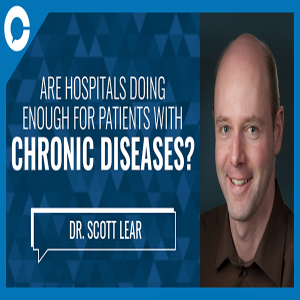
Ep 292 - Chronic Health and COVID-19
Guest: Dr Scott Lear
The coronavirus pandemic is exposing how poorly we manage patients with chronic diseases. According to Dr Scott Lear, a Professor of Health Sciences at Simon Fraser University, “This is because the system relies on the unnecessary requirement of having patients attend hospital clinics for treatment, instead of using ubiquitous communications technology.”
Lear says, “Approximately 12.8 million Canadians have a chronic disease and more than half of them have two or more. On any given day, hundreds of these patients go to hospitals for clinics, simple physician consultations and rehabilitation sessions.” But he stresses, “Hospitals are the last place they should be. And this is now being recognized as hospitals across Canada have stopped all clinic visits due to the coronavirus crisis.”
Why, you ask, does the system function this way – especially in a digitally connected world? Lear says, “Our healthcare system is a late adopter. It was designed more than fifty years ago when people were either cured or died in hospital.” He goes on to say the entire system has hung onto outdated models including billing.
“The coronavirus pandemic is a call to action for the Canadian healthcare system. Adversity brings with it challenge but also innovation,” says Lear. He goes on to say, “Coming out of this crisis, this crisis is showing us there are better ways to care for patients with chronic diseases. And once over, we must resist the urge to go back to business as usual.”
We invited Dr. Scott Lear of the Simon Fraser University’s Faculty of Health to join us for a Conversation That Matters about the potential benefit to our healthcare system now that COVID-19 has forced the system to adapt to one where chronic care patients may never have to step into a hospital again.
Conversations That Matter is a partner program for the Morris J Wosk Centre for Dialogue at Simon Fraser University. The production of this program is made possible thanks to the support of the following and viewers like you.
Please become a Patreon subscriber and support the production of this program, with a $1 pledge https://goo.gl/ypXyDs
Wednesday Jun 03, 2020
Wednesday Jun 03, 2020
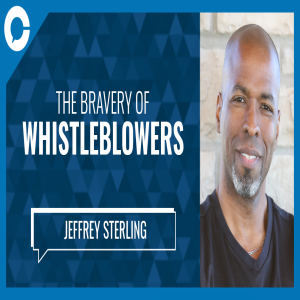
Ep 291 - The Bravery of Whistleblowers
Guest: Jeffrey Sterling
According to Fuad Alakbarov, the Azerbaijani-Scottish human rights activist, “Every country needs its whistleblowers. They are crucial to a healthy society. The employee who, in the public interest, has the independence of judgement and the personal courage to challenge malpractice or illegality is a kind of public hero.”
Brave heroes to be sure. Take the example of Dr Ai Fen, the Director of the Emergency Department at the Central Hospital in Wuhan, who shared information about COVID-19 with other doctors in late December. Dr Ai and the others have since been arrested or their whereabouts are unknown, according to the Times of Israel.
According to the University of Southampton, if China had intervened at that time, the transmission of COVID-19 could have been reduced by 95 percent. The government of China hid the truth. At great risk to themselves, people stand up to the suppression of the truth, be it in China or any other country where those in power seek to conceal the facts.
In the United States, the Whistleblower Protection Act was enacted in 1989 - an act that many whistleblowers say provided them with little or no protection. Former CIA agent Jeffrey Sterling in his book, “Unwanted Spy,” says the very act of carrying out his duty to report wrongdoing cost him his job and eventually his liberty.
What started as a discrimination complaint turned into allegations of leaking confidential information that led to jail time. He has since been released from prison and continues to shine a light on government wrongdoing.
Thanks to the support of the Allard Prize for International Integrity, we were able to arrange an online interview with Jeffrey Sterling for a Conversation That Matters about the overwhelming need to protect the brave women and men who simply can not turn their heads away from an injustice.
Conversations That Matter is a partner program for the Morris J Wosk Center for Dialogue at Simon Fraser University. The production of this program is made possible thanks to the support of the following and viewers like you.
Please become a Patreon subscriber and support the production of this program, with a $1 pledge https://goo.gl/ypXyDs
Tuesday Jun 02, 2020
Tuesday Jun 02, 2020
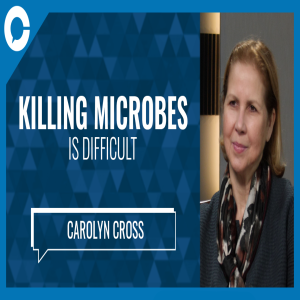
Ep 290 - Killing Microbes is Hard
Guest: Carolyn Cross
Antimicrobial resistance or drug resistance is one of the top five human health threats. That’s when viruses, bacteria and fungi can no longer be killed by the drugs that we have to deal with them. According to the World Health Organization, drug resistance will kill more people than cancer, diabetes and cholera combined.
When it comes to surgery, self infection of the surgical site is a problem. Your nose is home to many harmful germs (and even superbugs) and is a leading source of healthcare associated infections. In the U.S., up to 60% of hospitals remove these nasal germs with topical antibiotic presurgical nasal decolonization for major surgeries to reduce the likelihood of surgical site infections. Despite challenges that include low patient compliance, a five-day treatment regime and increasing antibiotic resistance, numerous randomized control trials indicate a 40% to 60% drop in these hospital acquired infections. For this reason, the World Health Organization recommends this pre-surgical treatment for ortho, spine and cardiac surgeries.
In Canada, only Vancouver Coastal Health requires universal presurgical nasal decolonization for all its major surgeries involving Ondine's Photodisinfection technology, a six-minute painless procedure. The infection reduction results have been significant over the past 9 years, since this health authority has implemented this first-of-a-kind technology. The addition of eliminating nasal pathogens with Ondine's Photodisinfection just minutes before major surgeries has contributed to the 80% reduction in serious infections. To date, more than 1,000 patients have been spared from these post surgical infections, saving millions of dollars annually. Ondine and Vancouver Coastal Health are now exploring if this same nasal decolonization treatment can be used to help prevent or treat COVID-19.
We invited Carolyn Cross of Ondine Biomedical to join us for a Conversation That Matters about the laser treatment her company has been developing to reduce surgical site infection rates.
Conversations That Matter is a partner program for the Morris J Wosk Center for Dialogue at Simon Fraser University. The production of this program is made possible thanks to the support of the following and viewers like you.
Please become a Patreon subscriber and support the production of this program, with a $1 pledge https://goo.gl/ypXyDs
Sunday May 24, 2020
Sunday May 24, 2020
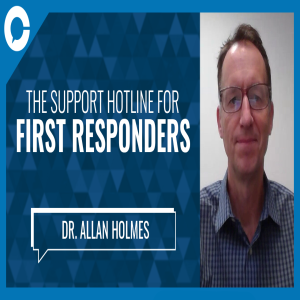
Ep 289 - Hotline for First Responders
Guest: Dr Allan Holmes
First Responders are the people rushing into a crisis when the rest of us are rushing away. They are there when criminals break the law, when a building is on fire, when someone has been hurt or is extremely ill or someone has fallen ill due to a pandemic.
COVID 19 not only compromises health and takes lives, it also adds emotional and psychological stress to the women and men who respond to emergencies and crimes. Dr Allan Holmes has been working with first responders for decades providing them with training and strategies designed to improve their workplace and their work. Working with Fire, Police and Ambulance, he and the team at Iridia Medical have now set up a support hotline for First Responders looking for help in addressing the many questions they face regarding their well-being, that of their families and their colleagues. The hotline is via email, if you are a first responder and you have questions about your health and what you should do, the email address is Covid 19 support @ iridia medical .com
We invited Dr Allan Holmes of Iridia Medical to join us for a Conversation That Matters about the questions First Responders have about COVID 19 and how to determine when they should or shouldn’t go to work.
Conversations That Matter is a partner program for the Morris J Wosk Center for Dialogue at Simon Fraser University. The production of this program is made possible thanks to the support of the following and viewers like you.
Please become a Patreon subscriber and support the production of this program, with a $1 pledge https://goo.gl/ypXyDs

Thursday Apr 30, 2020
Thursday Apr 30, 2020
Ep 288 - Your Pharmacist and Covid19
Guest: Annette Robinson - Derek Desrosiers
|
Are pharmacists an underutilized health care resource in the fight against the Coronavirus? “Pharmacists are the most accessible health care professionals in BC,” says Annette Robinson, the Vice-President of the Pharmacy Association. “One reason pharmacists may be overlooked is due to a perception that they are merely prescription fillers.” Past BCPhA President Derek Desrosiers says, “Pharmacists are the drug specialists for sure, but the scope of practice for them has expanded over the years. Past health care crises forced the healthcare system to empower and enlist pharmacists to not only provide flu shots, but fill emergency prescriptions and manage adaptations.” What it adds up to is an additional health care provider who is available seven days a week, from early in the morning to late at night. We invited Annette Robinson and Derek Desrosiers to join us for a Conversation That Matter about a health care resource you may have overlooked. Conversations That Matter is a partner program for the Morris J Wosk Center for Dialogue at Simon Fraser University. The production of this program is made possible thanks to the support of the following and viewers like you. Please become a Patreon subscriber and support the production of this program, with a $1 pledge https://goo.gl/ypXyDs
|