

54.1K
Downloads
555
Episodes
Beyond the Headlines, an in-depth, one on one conversation on the issues shaping our future.
Episodes
Aug 29, 2019
Aug 29, 2019
23 min
Ep 257
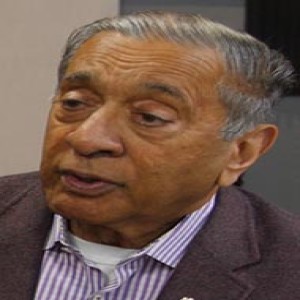
Guest: Wally Oppal
Headline: Policing in the 21st Century
Today’s police officer is a combination of crime fighter, detective, first responder and social worker who faces a myriad of crimes and criminals that didn’t exist a generation ago. Terrorism and cyber crime are just a few of the new threats to the safety of any community that are on the rise and are extremely challenging to address.
At the same time, as Wally Oppal says, “The public has very high expectations of the police.” Expectations that in most cases Oppal says the police are meeting, “I think, in western democratic societies we probably have the best policing in the world and that is due in large part to the high level of qualifications and training that are needed to be a police officer in Canada.”
What is clear is the web of security forces that are now compelled to work together and coordinate their efforts is expanding. No one security system can meet the needs of society, business and industry and our ever changing requirement to guard against terrorism.
We invited Justice Wally Oppal, the man who is heading up the review on education and training of police officers in BC to join us for a Conversation That Matters about preparing law enforcement officers for their role over the next few decades.
Conversations That Matter is a partner program for the Center for Dialogue at Simon Fraser University. The production of this program is made possible thanks to the support of the following and viewers like you.
To learn more about Wally Oppal’s career visit https://vimeo.com/355197889 Careers That Matter
Please become a Patreon subscriber and support the production of this program, with a $1 pledge https://goo.gl/ypXyDs
Aug 21, 2019
Aug 21, 2019
23 min
Ep 256
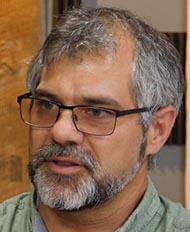
Guest: Glyn Williams-Jones
Headline: Volcanos in your backyard
On August 6th, 2010 at just about 3:30 in the morning, the ground in Lil’wat and Pemberton started shaking. People were woken, an emergency call went out and residents were told to – in essence – run. Run as fast and as far as you can because the mountain just over the horizon was crashing down into the valley.
The southern peak of Mount Meager collapsed. That triggered a series of rockfalls that crashed into the weak and heavily saturated south flank on the mountain. The weight of the rocks and the impact destabilized a huge amount of rock, dirt, mud, trees and anything else in its path.
The debris cascaded down seven kilometers of Capricorn Creek and dammed Meager Creek. Over the next 19 hours, water poured into the make-shift dam, creating a lake. The dam didn’t hold and when it let go, the water rushed toward Pemberton faster than you could run.
No one knew it was coming. The Mount Meager slide is comparable in size to the Hope slide and no one knew it was about to happen.
We invited volcanologist Glyn Williams-Jones of SFU’s Earth Sciences Department to join us for a Conversation That Matters about the program he and a complex web of other scientists are putting in place that will be an early warning system when Mount Meager decides to change its shape again.
Conversations That Matter is a partner program for the Center for Dialogue at Simon Fraser University. The production of this program is made possible thanks to the support of the following and viewers like you.
Please become a Patreon subscriber and support the production of this program, with a $1 pledge https://goo.gl/ypXyDs
Aug 21, 2019
Aug 21, 2019
23 min
Ep 255
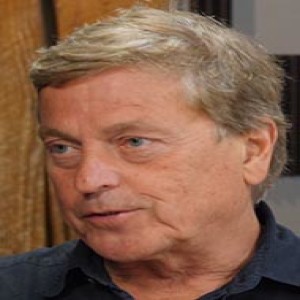
Guest: Ian Tostenson
Headline: Why is BC dragging its feet on RideSharing
If one of the major objectives of the government is to reduce the number of cars on the road, why is that same government so reluctant to introduce ridesharing? The sharing of 30 trips a day in one vehicle could take 20 cars off the road. Multiple that by hundreds of ridesharing vehicles and the number of cars absent on the motorways becomes significant. Significant enough to make a dent in carbon emissions from automobiles.
According to Ian Tostenson, of RideShare Now, “What’s behind this is unbelievable politics that rests in the heart of Surrey because that’s primarily where the influence of the taxi industry is and both the parties (NDP and Liberal) have been very concerned, especially since the last election where the NDP picked up some seats in Surrey.”
Recently the provincial government did relent to an introduction of ridesharing, with caveats that proponents of the system say will slow down the implementation and severely restrict the number of drivers offering the service.
We invited Ian Tostenson of RideSharing Now to join us for a Conversation That Matters about the myriad and confusing reasons why British Columbia is dragging its feet and standing in the way of ridesharing.
Conversations That Matter is a partner program for the Center for Dialogue at Simon Fraser University. The production of this program is made possible thanks to the support of the following and viewers like you.
Please become a Patreon subscriber and support the production of this program, with a $1 pledge https://goo.gl/ypXyDs
Aug 21, 2019
Aug 21, 2019
23 min
Ep 254
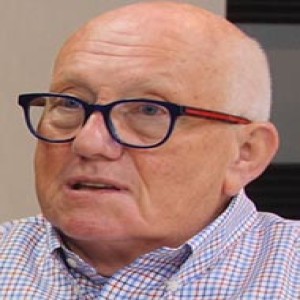
Guest: Raymond Greenwood
Headline: Celebration of Light, Celebration of Community
As they have every summer for the past 29 years, the skies over English Bay played host to an enormous public spectacle. That was the scene from the water under the fireworks on July 27, 2019.
In an era when so many people have their faces buried in their phones, I am left wondering why so many people turn out to watch explosives go boom in the night sky. Does the Celebration of Light represent an element in modern society we are all crave? That’s what Ray Greenwood thinks when he says, “We want to be a part of the community; it’s been that way since the very first night.”
It’s an interesting observation, one that is both local and global. Fireworks shows have attracted large audiences for longer than mobile devices have been ubiquitous. But why, in a digital world, are the audience numbers growing?
Could it be that we yearn to rub shoulders with others? Feel the swell of emotion that a crowd of people creates? Do the fireworks force us to interact with one another? Do they create a focal point, a shared experience?
We invited Raymond Greenwood, the man who got the whole thing started, to join us for a Conversation That Matters about major city events, why they’re good for the community and how to make them happen.
Conversations That Matter is a partner program for the Center for Dialogue at Simon Fraser University. The production of this program is made possible thanks to the support of the following and viewers like you.
Please become a Patreon subscriber and support the production of this program, with a $1 pledge https://goo.gl/ypXyDs
Aug 5, 2019
Aug 5, 2019
22 min
Ep 253
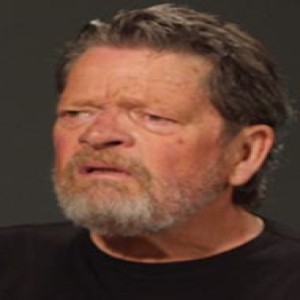
Guest: John MacLachlan Gray
Headline: White Angel - Vancouver’s Oldest Cold Case
Vancouver in 2019 is regularly ranked as one of the top cities to live in globally. But it wasn’t always that way. Go back 95 years to when author John MacLachlan Gray says, “Vancouver was a dirty, smelly, corrupt hell hole” – a place that played host to what is the oldest cold case in the city’s history.
In White Angel, MacLachlan Gray takes us inside the seamy underbelly of the city: not just the skids, but the entire city. He introduces us to a police department that was less than professional, high society that was scandalous, adulterous and outright corrupt. The city across all socioeconomic levels was blatantly racist – racist to everyone and to the Chinese in particular.
White Angel is the story of the murder of a Scottish nanny in a Shaughnessy mansion, it is a story of lies, orgies, alcohol, drug abuse and police corruption. It is centred around the murder by gunshot of Janet Stewart and subsequent ham-handed police investigation and cover-up. As Gray points out, “The city is buzzing with rumors” and the story spins out of control as the powerful United Council of Scottish Societies demands an inquiry. The murder victim’s fellow nannies have accused the Chinese houseboy of the murder and the newly established Ku Klux Klan, which took up residency in Shaughnessy, picks up the cause by abducting the poor young man and attempts to beat a confession out of him.
The poor houseboy escapes the custody of the KKK only to be arrested by the police who promptly charge him with murder. It is a case that is beautifully told by one of Vancouver’s most colourful playwrights and authors.
Throw in an undertaker who alerts a failed poet turned journalist about Janet Stewart’s death and subsequent cover-up and the story becomes so real your senses come alive. As Gray points out, “The killing created a situation analogous to lifting a large flat rock to expose the creatures hiding underneath” and those creatures represented a holy inglorious and unglamourous city.
As you turn the pages you can’t help but ask yourself: what happened to Vancouver? How did we go from a lawless city with a thriving criminal class to the city of today? It’s a dramatic transformation.
We invited John MacLachlan Gray to join us for a Conversation That Matters about how the cold case of the Scottish nanny epitomizes Vancouver in its 1924 opium-hazed, smoke-choked and rain soaked uglier days.
Conversations That Matter is a partner program for the Center for Dialogue at Simon Fraser University. The production of this program is made possible thanks to the support of the following and viewers like you.
Please become a Patreon subscriber and support the production of this program, with a $1 pledge https://goo.gl/ypXyDs
Jul 25, 2019
Jul 25, 2019
23 min
Ep 252
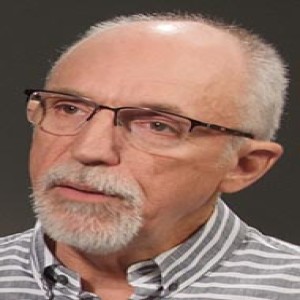
Guest: BC Mitchell
Headline: Obliteration - When Cultures Collide
The harsh reality of life in most of the 600 plus First Nations communities is Canada is not what we see in tourist brochures or in the colourful costumes that performers wear at ceremonial events. What we frequently see at big city events like conventions and political press conferences is a white-washed image of what we want aboriginal culture to look like.
Elders, dancers, drummers and singers show up all dressed up playing their part blessing this event or that one. The organizers come on stage and dutifully acknowledge they are on indigenous land. Many use the phrase “on the unceded territory,” unaware that means the owners of the land never agreed to hand over control to the invading colonialists.
BC Mitchell, a former reporter who went on to become the communications manager for the BC Treaty Commision for 15 years, witnessed the reality of life for the women, children and men who live in the forgotten corners of their traditional territories.
That is not to say, all hope is lost. In fact, BC Mitchell is optimistic the relationship between indigenous people and Canada is improving. While he’s hopeful, he’s not blind. In “Obliteration,” he takes the reader into a small Northern Ontario community and showcases ignorance, racism and violence through the eyes of a dysfunctional teen living in a dysfunctional town.
The picture is bleak. The protagonist in Obliteration is a young Caucasian Canadian living on one side of the highway in a fictional town that keeps the Indians over there and the rest of its residents on the other side of hell. Life is not good for anyone.
From the outside, life in remote rural mixed cultural communities simply looks horrible – the kind of town you race past in your car. BC Mitchell takes us inside that world, showcases it for what it is and introduces the reader to people who have names, souls and the scars acquired from a lifetime of tragedy.
This is a book I could not put down. I have been to many First Nations communities and seen first hand the horrid living conditions. I also marvel at our ability as Canadians to dismiss what Martin Luther King described as “islands of poverty in a vast ocean of prosperity.” How is that we rush to the aid of people halfway around the world, yet ignore the need in our own country?
We sat down with author BC Mitchell for a Conversation That Matters about his book “Obliteration” and the long slow process of healing the relationship between indigenous people and those who came and took their land.
I also encourage you to view the Conversation I had with Senator Murray Sinclair on Reconciliation, where to from here. https://vimeo.com/336860259
Conversations That Matter is a partner program for the Center for Dialogue at Simon Fraser University. The production of this program is made possible thanks to the support of the following and viewers like you.
Please become a Patreon subscriber and support the production of this program, with a $1 pledge https://goo.gl/ypXyDs
Jul 18, 2019
Jul 18, 2019
23 min
Ep 251
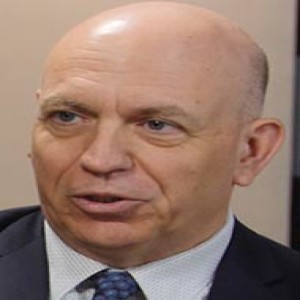
Guest: Charles Gauthier
Headline: Downtown Vancouver by the Numbers
If you were under the impression that downtown Vancouver was thriving, you were right. In fact, it’s booming. Tech giants are descending on the city, tourism numbers continue to climb, office and retail construction goes on unabated and more and more people are calling it home.
The downtown is just shy of four square kilometers and comprises a 90 block area. It accounts for just 10% of the city’s population, but it’s home to more than 35 percent of the jobs that exist within the more than 8,000 registered companies it houses.
Over the last decade, the downtown population has grown three times faster than the rest of the city and the backgrounds of residents are diverse. The majority of whom, about 90%, are either of European or Asian ancestries and the rest represent the world. The average age of residents is 37 years and the average household income is $66,000.
Finance, science, tech, hospitality, insurance and retail make up much of the top industry sectors which collectively employ 135,000 people. And when it comes to starting a new company, especially a clean tech enterprise, well, Vancouver is an exceptional incubator for start-ups – it’s ranked number two in Canada.
So what makes for a great downtown? Transit, services, open spaces, entertainment and safety all play important roles, each of which Vancouver ranks at or near the top of the list. Transit is a big issue. When it comes to getting around downtown, buses and SkyTrain are good at getting people in and out of the core – once in the heart of the city, walking and cycling become attractive and efficient options.
A couple of other interesting transportation facts about Vancouver are related to ride hailing and ride sharing. First, we are the largest North American city without Uber or Lyft. That fact may have influenced the fact that we are the number one car-sharing centre in North America. And we’re right up there when it comes to bicycle sharing where, last year, close to half a million shared bike trips were taken.
And also on the list is homelessness. Vancouver is no different than other major cities where people who can not afford a place to live end up on the street. The City of Vancouver continues to develop services and housing options to address the needs of people who call the street home and more needs to be done.
We invited Charles Gauthier of the Downtown Vancouver Business Improvement Association to join us for a Conversation That Matters on the state of downtown and what it says about the model the city is setting for liveability in an urbanized world.
I also encourage you to view the Conversation I had with Charles Gauthier three years ago about re-envisioning the city. You can find that conversation here https://www.youtube.com/watch?v=qYdY6meNUnA&t=222s
Conversations That Matter is a partner program for the Center for Dialogue at Simon Fraser University. The production of this program is made possible thanks to the support of the following and viewers like you.
Please become a Patreon subscriber and support the production of this program, with a $1 pledge https://goo.gl/ypXyDs
Jul 10, 2019
Jul 10, 2019
23 min
Ep 250
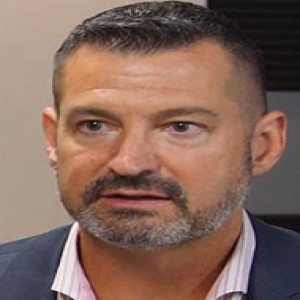
Guest: Duncan Wilson
Headline: Trouble on the Waterfront - Rebuttal
The Port of Vancouver says the plan to expand container traffic at Delta Port is unfolding in a manner that ensures the authority meets its mandates. The port authority is charged with the safe, environmentally and financially sound management of one of the largest ports on the West Coast of North America.
And that brings us to this week’s Conversation. As outlined in a previous episode, one of the Port’s terminal operators says it is being shut out of the container site expansion and believes the Port of Vancouver is in a conflict of interest.
We invited Duncan Wilson of the Port of Vancouver to join us for a Conversation That Matters about the arduous process that has been underway for many years to determine how to meet the demand for container services in the future.
I also encourage you to view the Conversation I had with Doron Grosman of Global Container Terminals on this same issue. https://vimeo.com/342314601
Conversations That Matter is a partner program for the Center for Dialogue at Simon Fraser University. The production of this program is made possible thanks to the support of the following and viewers like you.
Please become a Patreon subscriber and support the production of this program, with a $1 pledge https://goo.gl/ypXyDs
Jul 5, 2019
Jul 5, 2019
23 min
Ep 249
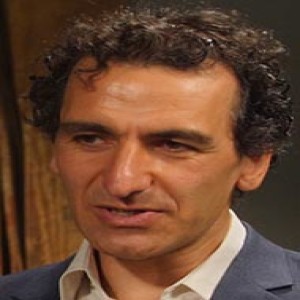
Guest: Simon Donner
Headline: Digging into the Science of Climate
You would think with all the chatter going on about climate that we’d all have a good understanding on the elements of our atmosphere, the role of carbon and other greenhouse gases and the correlation between human activity and climate change.
If you consider yourself to be informed: without looking it up, what is the number one greenhouse gas? If you answered water vapour, you’d be right. It accounts for 80 per cent of total greenhouse gas mass and 90 percent of volume. What about CO2? What percentage is it in the total mix of greenhouses gases? And if you know that, what about anthropogenically generated CO2? What percentage does it account for?
Then what is the dynamic interplay between CO2 within the troposphere (where we live)? And what about CO2 in the stratosphere? Why does CO2 heat the earth in one atmospheric layer and cool it in another? Then there’s the sun, which is hot – as much as 17 million degrees at the core and 5,800 degrees Celsius at the photosphere or surface. Add in solar magnetic energy and coronal mass eruptions, and the climate starts to become challenging to understand.
The Canadian government is now declaring we’re in an emergency state when it comes to climate. We sat down with climate professor Simon Donner for a Conversation That Matters about the science of climate, how it works, what we can do and the reality of our climate and the future.
I also encourage you to view the Conversation I had with Freeman Dyson of the Institute for Advanced Studies on CO2 why the increase in concentration is turning the earth greener. https://urlzs.com/hGeUz
Conversations That Matter is a partner program for the Center for Dialogue at Simon Fraser University. The production of this program is made possible thanks to the support of the following and viewers like you.
Please become a Patreon subscriber and support the production of this program, with a $1 pledge https://goo.gl/ypXyDs
Jun 20, 2019
Jun 20, 2019
23 min
Ep 248
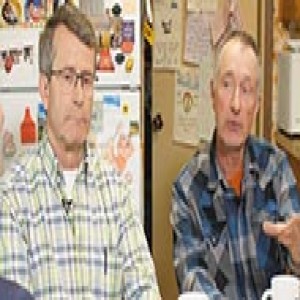
Guest: Ken Boon and Bob Fedderly
Headline: Site C revisited
If you thought the fight over Site C was over, well, you’d be wrong. The people who have been opposed to the building of the dam? They say isn’t needed and are watching closely as the mega-project continues to claws its way into the banks of the Peace Canyon.
The Peace Valley Landowner Association, along with the Blueberry River and Moberly First Nations, continue to argue the project is not needed, is environmentally unsound and will ultimately be a colossal waste of money. As proof, they point to the C.D. Howe report of January 2019, which says that cancelling the project and replacing it with alternative energy sources will be less expensive than completing the project, even when factoring in sunk costs.
The Boons, whose farm has been expropriated because it will be underwater once the dam is completed, invited us to take a look at the project from his perspective, which he maintains is not needed.
We sat down with Ken Boon and Bob Fedderly in the Boon family kitchen for a Conversation That Matters about the project Premier Horgan campaigned against only to approve once in office.
I also encourage you to view the Conversation I had with past BC Hydro CEO Jessica McDonald on why the Site C dam was required: https://www.youtube.com/watch?v=i_JnO8yIO_Q&t=1s
Conversations That Matter is a partner program for the Center for Dialogue at Simon Fraser University. The production of this program is made possible thanks to the support of the following and viewers like you.
Please become a Patreon subscriber and support the production of this program, with a $1 pledge https://goo.gl/ypXyDs