
47K
Downloads
534
Episodes
Beyond the Headlines, an in-depth, one on one conversation on the issues shaping our future.
Episodes
Monday Feb 15, 2021
Monday Feb 15, 2021
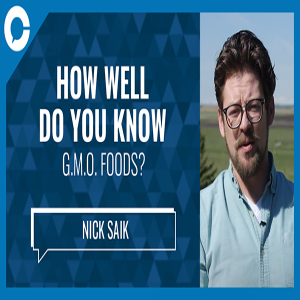
Ep 332 - Do you KNOW GMOs?
Guest: Nick Saik
Everything you eat has been modified.
When it comes to plants, fruits and vegetables, everything you put in your mouth has been modified one way or another. Cross-pollination, hybridization, open pollination, mutagenesis and genetic engineering all change the makeup of food.
These four methods are processes that can produce new strains of food – can. Won’t necessarily, but can. And when they do, they are accepted into the food supply after appropriate testing. These are shot-in-the-dark best guess tries. Some work; most don’t.
Mention genetics and for many, it is an out-of-bounds topic. “Franken-wheat” or “Franken-tomatoes” or corn or papayas from Hawaii. Yes, Hawaii, where three counties tried to enact laws forbidding genetically modified foods but were overruled by the state government and the courts.
The debate, the rules and the process of going into the lab and helping a plant or fruit fight off a virus or bacteria or be drought resistant is so onerous and expensive few companies are willing to invest their time and money.
As Nick Saik, the host of KNOW - GMO says, “It costs, on average, 10 years and a hundred million plus dollars to deregulate a crop.” He goes on to say, “The delay is largely driven by the public fearing these crops.” And these delays and the costs could very well mean we will never be able to grow the food billions of people will need.
The gap between perception and what his research was telling him led Nick to create a video series about GMOs. We invited Nick Saik to join us for a Conversation That Matters about GMOs and what we need to know about them if we hope to feed the world of 2050.
Please become a Patreon subscriber and support the production of this program, with a $1 pledge https://goo.gl/ypXyDs
Saturday Feb 06, 2021
Saturday Feb 06, 2021
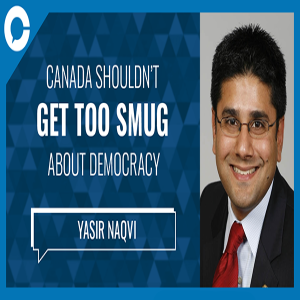
Ep 331 - Canada shouldn’t get too smug about democracy
Guest: Yasir Naqvi
The storming of Capital Hill in Washington D.C. on January 6, 2021 came as a shock. The storming of the Capitol Building seemed inconceivable in the United States and to many Canadians it seems even less likely that it could happen here. “Not so,'' says Yasir Naqvi, the CEO of Inclusion Canada and the former Attorney General of Ontario.
Naqvi points out, “Canadians are often smug when it comes to American politics. We like to believe that we are more progressive than our southern neighbours, that we could never elect our own Trump, that we are somehow better, less corrupt, nicer.” He believes “that thinking is more than ignorant – it’s dangerous.”
It’s dangerous because we can be blind to the threats that give rise to an insurrection such as was witnessed in the United States. The key elements to be aware of, according to Naqvi, are “a rise in alt-right media, the undermining of science and facts, violence against others and the chipping away of trust in public institutions.” All of these elements are present and active in Canada.
The responsibility of citizenship in a democracy is to debate in a civil manner, to endeavour to enhance society with courage, to seek justice and compassion. We all have that responsibility, which is to challenge misinformation, to defend the rights of all and to work through challenges in pursuit of better communities.
We invited Yasi Naqvi to join us for a Conversation That Matters about the state of democracy in Canada, the ever-present threats and our responsibilities as citizens.
Conversations That Matter is a partner program for the Morris J Wosk Centre for Dialogue at Simon Fraser University. The production of this program is made possible thanks to the support of the following and viewers like you.
Please become a Patreon subscriber and support the production of this program, with a $1 pledge https://goo.gl/ypXyDs
Friday Feb 05, 2021
Friday Feb 05, 2021
Jan 15, 2021
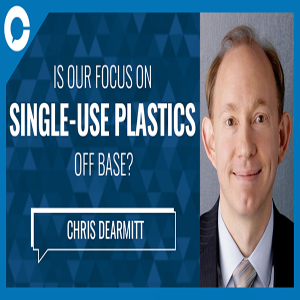
Ep 330 - Is our single use plastics focus off base?
Guest: Dr. Chris DeArmitt
“When it comes to single-use, we might be better off focusing on paper rather than plastic,” says leading plastics scientist Chris DeArmitt. He is the author of “Phantom Plastics,” a book that debunks the prevailing thoughts about plastics. He points out that the banks of Canada and England both studied plastic versus paper for the country's money and in both jurisdictions, the decision was to print plastic money rather than paper because it was better for the environment.
Heresy, you say! How can that be? DeArmitt claims, “Life cycle analysis is the answer. Plastic money has seven times the lifespan of paper money.” When looking at the total impact of paper money, the carbon footprint and environmental cost far exceeds that of plastic. DeArmitt starts by pointing to the weight of paper saying, “The extra fuel required to transport paper over plastic is just one element in the life cycle analysis of money. And then add in the impact of harvesting trees, mashing them into pulp and paper and the limited lifespan, and it all adds up to plastic being the best choice.”
DeArmitt continues, “Litter is created by people who can stop doing that by making better choices… When you attach value to plastic, it does not clog drains or end up in the sewer. The proof of that is in money. There are more than eight billion plastic bank notes printed each year and they do not get discarded.”
We invited Dr Chris DeArmitt to join us for a Conversation That Matters about plastics, the myths and misconceptions.
Conversations That Matter is a partner program for the Morris J Wosk Centre for Dialogue at Simon Fraser University. The production of this program is made possible thanks to the support of the following and viewers like you.
Please become a Patreon subscriber and support the production of this program, with a $1 pledge https://goo.gl/ypXyDs
Saturday Jan 30, 2021
Saturday Jan 30, 2021
Jan 8, 2021
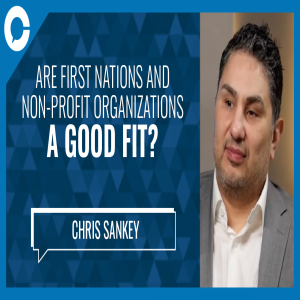
Ep 329 - Are First Nations and NGOs a good fit?
Guest: Chris Sankey
Chris Sankey says, "It's time for NGOs to butt out of First Nations business. What they are doing is tantamount to environmental colonialism." Sankey wants outsiders to stay in their lane and stop pretending to speak for First Nations.
He says, "NGOs show up to run a campaign where it suits their interests and once they have thwarted a resource development they leave. And when they leave, they leave that First Nation doomed to further poverty."
Sankey says First Nations now have a place at the table and on the balance sheet of resource development. That place in Canadian history was not available to First Nations until landmark court cases recognized the inherent right to consult and participate in development on traditional lands.
Resource development for many First Nations provides access to economic opportunities that create jobs and support community infrastructure. These are the building blocks of an improvement in quality of life and self actualization.
Sankey says, "Now, along come these NGOs who have an agenda that, in essence, tells us to forego these opportunities and destine ourselves to continued poverty. I'd like them to stay out of our business."
We invited Chris Sankey to join us for a Conversation That Matters about why it is time for First Nations to speak up and tell others to butt out.
Conversations That Matter is a partner program for the Morris J Wosk Centre for Dialogue at Simon Fraser University. The production of this program is made possible thanks to the support of the following and viewers like you.
Please become a Patreon subscriber and support the production of this program, with a $1 pledge https://goo.gl/ypXyDs
Friday Jan 29, 2021
Friday Jan 29, 2021
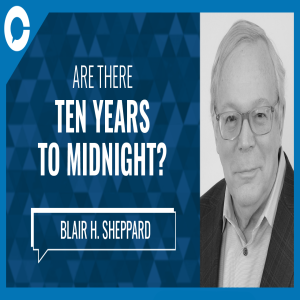
Ep 328 - Are there Ten Years to Midnight?
Guest: Blair H. Sheppard
Blair Sheppard thinks big and from his vantage point, he says there are only “Ten Years to Midnight” – which is the title of his book that addresses four urgent global crises and the strategies needed to solve them. It is not a book he wanted to write. He didn’t seek out these crises. Rather they emerged as he travelled the globe, observing trends in India, Spain, the UK, the United States, along with a dozen other countries.
Sheppard is the former Dean of the Business School at Duke University and the Global Head of Strategy and Leadership at PricewaterhouseCoopers. He is an optimist by nature and he’s worried about our collective future. The reason he’s concerned is the scope of the challenges the world faces and the big thinking that is needed to address them by people with the power to make the necessary changes.
We invited Blair Sheppard to join us for a Conversation That Matters about the major issues facing us all and the insights, strategies and courage needed to address them.
Conversations That Matter is a partner program for the Morris J Wosk Centre for Dialogue at Simon Fraser University. The production of this program is made possible thanks to the support of the following and viewers like you.
Please become a Patreon subscriber and support the production of this program, with a $1 pledge https://goo.gl/ypXyDs
Friday Jan 29, 2021
Friday Jan 29, 2021
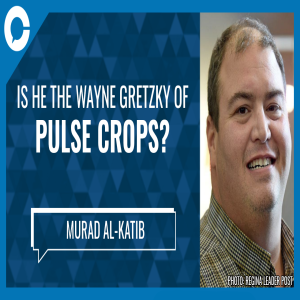
Ep 327 - Is he the Wayne Gretzky of pulse crops?
Guest: Murad Al-Katib
“Sustainable three-crop rotation” does not roll off your tongue, nor is it an idea that can be easily comprehended. Yet sustainable three-crop rotation is at the heart of a transformation in agriculture that started in Saskatchewan about 20 years ago.
What is sustainable three-crop rotation, you ask? They are cereal, canola and pulse crops. The first two, you’ve heard of. But pulse crops – what the heck are they? And why should we care?
The reasons to care are environmental, economic and security. First, environmentally: pulse crops, like lentils, affix nitrogen into the soil, which means the field does not have to lay fallow to rejuvenate. That, in turn, means a new crop can grow and while doing so, it captures carbon from the atmosphere and sequesters it. Both effects make pulses environmentally beneficial.
Economically, the value to the Canadian economy is in excess of three billion dollars a year and growing. That, in turn, leads to jobs and further economic growth. And the phenomenal success of AGT Terminals, headed by Murad Al-Katib, has increased the production of foods from pulses and increased food security in Canada.
Central to AGT’s success is science and technology. Al-Katib’s company employs more than 30 researchers who are not only growing an abundance of food, they are also producing and milling it in Canada – plant-based foods that produce protein rich foods that require less land and less water than traditional protein products.
Data, analytics, decision support, artificial intelligence, better cameras and drones are all a parts of the agriculture equation that are enhancing the ability of farmers to produce a bounty of food for a world of more than 9.5 billion people by 2050. The farms of today and tomorrow employ IT teams to help run efficient and sustainable businesses.
We invited Murad Al-Katid, the 2017 Ernst & Young World Entrepreneur of the Year, the man Professor Sylvain Charlebois calls the “Wayne Gretzky of pulses,” to join us for a Conversation That Matters - Food For Thought episode about the limitless possibilities in Canadian agriculture.
Conversations That Matter is a partner program for the Morris J Wosk Centre for Dialogue at Simon Fraser University. The production of this program is made possible thanks to the support of the following and viewers like you.
Please become a Patreon subscriber and support the production of this program, with a $1 pledge https://goo.gl/ypXyDs
Tuesday Jan 12, 2021
Tuesday Jan 12, 2021
Dec 18, 2020
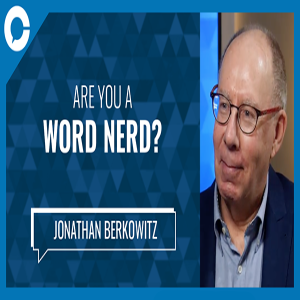
Ep 326 - Are you a word nerd?
Guest: Jonathan Berkowitz
What’s a 14-letter word for a crossword puzzle lover that, when used, makes you sound sesquipedalian? Naturally, the answer is as plain as day: it is “cruciverbalist” which the enigmatologist Will Shortz says “is a person who loves to have the cruciverbalist pleasure centre in their brain tickled.”
Crossword puzzles are a gift, not just for Christmas or for filling endless hours of pandemic isolation. They are simply a gift to the spirit – the imagination and the mind of solvers. As Margaret Farrar wrote, “You can’t think of your troubles while solving a crossword.” Ms. Farrar was one of only four editors of the New York Times crossword puzzle which is the gold standard in North America.
The wonderful thing about crossword puzzles is they are for everyone. There is a puzzle-solving level that meets your enthusiasm to solve the puzzle. As Jonathan Berkowitz says, “Puzzle creators actually want you to solve their puzzle.” And how you do that is up to you. There are no rules. You can click through letters on your keyboard with the “error check mode” on or off; you can call a friend or you can look it up. You can solve the puzzle any way you choose.
In the solving of the puzzle, you often discover new words that ignite thoughts and open doors to history, geography, law, the sciences – and they are the key to your imagination. Crossword puzzles are much more than entertainment. They are a launching pad to worlds you can discover and rediscover.
We invited Jonathan Berkowitz, cruciverbalist extraordinaire, to join us for a Conversation That Matters about the deep rich world of puzzling.
Conversations That Matter is a partner program for the Morris J Wosk Centre for Dialogue at Simon Fraser University. The production of this program is made possible thanks to the support of the following and viewers like you.
Please become a Patreon subscriber and support the production of this program, with a $1 pledge https://goo.gl/ypXyDs
Tuesday Jan 12, 2021
Tuesday Jan 12, 2021
Dec 11, 2020
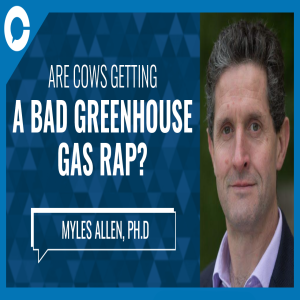
Ep 325 - Are cows getting a bad GHG Rap?
Guest: Myles Allen, PhD
Leading climate scientist Myles Allen says, "The traditional way of accounting for methane emissions from cows overstates the impact of a steady herd by a factor of four” – which, he says, is a problem. Allen goes on to say, "If we are going to set these very ambitious goals to stop global warming, then we need to have accounting tools that are fit for purpose… The errors distort cows' contributions – both good and bad – and, in doing so, give CO2 producers a free pass on their total GHG contribution."
Allen is a heavyweight in climate circles. The BBC described him as the physicist behind Net Zero. Based on his work with the IPCC in 2001, when quantifying the size of human influence on observed and projected changes in global temperatures. In 2005, he proposed global carbon budgets and in 2010, he received the Appleton Medal and Prize from the Institute of Physics for his work in climate sciences.
Over the past few years, he has been the coordinating lead author for the 2018 IPCC special report on “1.5 degrees” and he has long been a proponent of fossil fuel producers being made to take responsibility for cleaning up after the products they sell, rather than shifting that onus on powerless consumers. All of this leads to cows and why he cares that the math is right.
According to Allen, cows get lumped into the CO2 equivalent measurements, which the Oxford professor says is wrong. "And that," says Allen, "lets carbon producers off the hook because they can and do point to incorrect – yet widely accepted accounting of cows' contribution to GHG production. In essence, they're blaming the cows rather than taking full responsibility."
We invited Myles Allen to join us for a Conversation That Matters about why a steady herd size of cows is not the problem and a slow decrease in herd size, may in fact be part of the solution.
Conversations That Matter is a partner program for the Morris J Wosk Centre for Dialogue at Simon Fraser University. The production of this program is made possible thanks to the support of the following and viewers like you.
Please become a Patreon subscriber and support the production of this program, with a $1 pledge https://goo.gl/ypXyDs

Tuesday Jan 12, 2021
Tuesday Jan 12, 2021
Dec 4, 2020
Ep 324 - In the name of Jack Webster; What Precisely is happening to News?
Guest: Jas Johal
He was known as the King of the airways in British Columbia for close to 40 years. Since his retirement the foundation in his name has been recognizing and celebrating excellence in journalism. This year on Dec 8, the awards dinner is being netcast opening up attendance, for the first time to the general public who can join in on the celebration.
Back to Webster the reporter, if it was on the public agenda, he was there. When prisoners at the BC Penitentiary rioted and took hostages in 1963, they asked Webster to resolve the standoff. They asked for him because he was trusted at a time when mainstream media was believed to be fulfilling the responsibilities for the fourth estate – to step in, stand up, advocate, call out, and record the people and events of our lives.
Since Webster’s retirement in 1988, the media landscape has changed dramatically. In Vancouver, for example, the major powerhouses of media in print, radio, and TV have all seen their constituencies dwindle. Along with the shrinking audiences, so too goes ad revenue which, in turn, leads to cuts in newsrooms and that leads to further reductions in audiences.
The money simply isn’t there to support media outlets that we trust to provide an overview of our province, regions, cities, and municipalities. There aren’t enough resources to go around and that robs readers, listeners, and viewers of valuable and vital information they need to make informed decisions.
Alternative or non-mainstream media outlets have popped up and are attempting to fill the void. The challenge, however, is that most of those outlets – including this show – have fewer resources than the big players. Then add in a less than full-bodied embrace of journalistic standards, and the value of the information shared through smaller or single issue outlets can diminish and be dismissed.
We invited two-time Webster Award Winner and former MLA for Richmond-Queensborough Jas Johal to join us for a Conversation That Matters about his take on the state of media.
Conversations That Matter is a partner program for the Morris J Wosk Centre for Dialogue at Simon Fraser University. The production of this program is made possible thanks to the support of the following and viewers like you.
Please become a Patreon subscriber and support the production of this program, with a $1 pledge https://goo.gl/ypXyDs
Friday Jan 08, 2021
Friday Jan 08, 2021
Nov 27, 2020
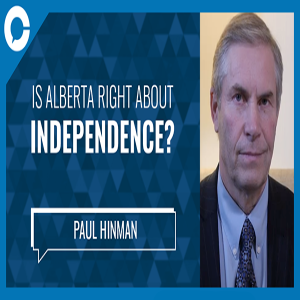
Ep 323 - Is Alberta right about independence?
Guest: Paul Hinman
According to George Bernard Shaw, “The single biggest problem in communication is the illusion that it has taken place.” Dialogue – healthy dialogue – is the foundation of solid respectful relationships. For anyone who looks at and understands the relationship between Ottawa and Alberta, they know it has been toxic, controlling and hostile. Prime Minister Wilfred Laurier in 1905 divided up the Northwest Territories and, in doing so, forever ensured that Alberta would be subservient to Ottawa.
Laurier’s Minister of the Interior Clifford Sifton in 1904 said, “We desire – in fact, every patriotic Canadian desires – that the great trade of the prairies shall go to enrich our own people in the east, to build up our factories and our workshops and contribute in every way to our prosperity.” The Canadians Sifton was referring to were those in Ontario, not Canadians from coast to coast.
It is a mindset and it has been the practical reality since Alberta was created by Ottawa in 1905. Ottawa was fully aware of the oil in the Athabasca basin going back to the late 1800s. The basin is also home to one of the world’s richest high-grade uranium supplies. The region, all of which was the Northwest Territories, was and continues to be the economic engine of Canada.
The winds of separation blew through Alberta in the 80s but were calmed when investment in the oil sands soared, providing billions of dollars in employment and taxes. Any hint of discontent literally evaporated during the early 2000s. Then the Saudis, in an effort to undermine American oil production, crashed the price of oil and also crashed the Alberta economy.
Over the years, Ottawa received in excess of $600 billion in transfer payments from Alberta alone. Then as Alberta’s economic boom calmed, tensions between Ottawa and Edmonton grew. They grew to the point where an appetite for separatism reemerged and continues to grow.
Independence parties started to crop up and now a coalition of separatist groups has formed under the Wildrose Independence Party banner. We invited Paul Hinman, the leader of the Wildrose Independence Party to join us for a Conversation That Matters about why he says the time to act is now.
Conversations That Matter is a partner program for the Morris J Wosk Centre for Dialogue at Simon Fraser University. The production of this program is made possible thanks to the support of the following and viewers like you.
Please become a Patreon subscriber and support the production of this program, with a $1 pledge https://goo.gl/ypXyDs