
47K
Downloads
534
Episodes
Beyond the Headlines, an in-depth, one on one conversation on the issues shaping our future.
Episodes
Thursday Apr 23, 2020
Thursday Apr 23, 2020
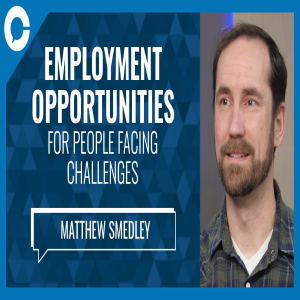
Ep 286 - Mission Possible
Guest: Matthew Smedley
Do companies have a responsibility to provide employment for the disenfranchised? Matthew Smedley says, “Yes, they do and doing so is good business!” He goes on to say, “Society, not the economy, is the real marketplace. And smart companies realize that looking after people – all people, including those who have been marginalized – builds better societies and stronger economies.”
Smedley also says, “People who are currently outside of the workforce are there for a host of reasons that include seen and unseen diversabilities. Many are eager to work and they represent an untapped talent pool.” Reemployment for many after extended absences from the rigors of work, he acknowledges, is challenging.
Mission Possible is a community based organization that, since 1992, has been providing people who have been unemployed with the skills needed to regain employment. The other side of the equation are employers who frequently are reluctant to create opportunities for people who need flexible work environments. Mission Possible is there for them as well.
We invited Matthew Smedley to join us for a Conversation That Matters about why hiring people with challenging lives benefits them, the companies they work for, and the community.
Conversations That Matter is a partner program for the Morris J Wosk Center for Dialogue at Simon Fraser University. The production of this program is made possible thanks to the support of the following and viewers like you.
Please become a Patreon subscriber and support the production of this program, with a $1 pledge https://goo.gl/ypXyDs
Wednesday Apr 22, 2020
Wednesday Apr 22, 2020
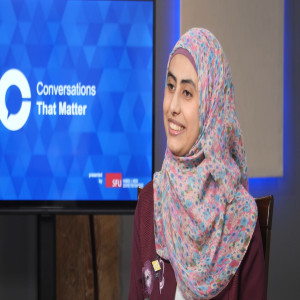
Ep 285 Thank you Canada - A Syrian Refugee’s story
Guests: Nour Suliman
Imagine, if you can, that for three of your 14 or 15 years of life you have been on the move in your homeland – staying one step ahead of the guns, the bullets and the bombs that are devastating you, your family and your community. You and 16 of your family squeeze into a car so that your grandmother, your uncle, your mother and father, along with your siblings and your cousins can wake up one more day.
Finally, you arrive at what you hope will be a safe house. You’re there for a matter of hours and your father says, “We have to move.” By now, his sense of survival is so finely tuned that he is aware of pending danger. You are exhausted. You were hoping for at least one night of sleep but your father insists, “Everyone get back in the car!”
You do as you are told. All 17 of you drive through the night, hoping to get to the Jordanian border – a border that is officially closed to refugees. Your father and uncle pay a guy with no name, a guy you don’t know who says he can get you all to the border but only in the dead of night. As you walk through harsh terrain, with no light, no water and no options, you learn the house you hoped to be sleeping in last night was bombed and destroyed. The house had been targeted because you and your family were there.
The nightmare continues as you enter Jordan and are accepted into a refugee camp. The water is putrid, the air is thick with aromas that make you gag. And through all of it, you hope that one day you will escape the nightmare of your life. You pray for a miracle.
We invited Nour Suliman to join us for a Conversation That Matters about the journey she and her family endured and the blessed miracle of Canada’s welcome.
Conversations That Matter is a partner program for the Morris J Wosk Center for Dialogue at Simon Fraser University. The production of this program is made possible thanks to the support of the following and viewers like you.
Please become a Patreon subscriber and support the production of this program, with a $1 pledge https://goo.gl/ypXyDs
Wednesday Apr 22, 2020
Wednesday Apr 22, 2020
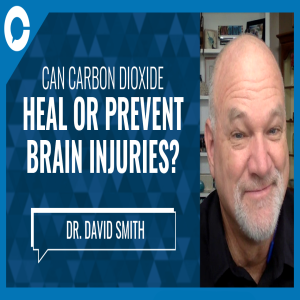
Ep 284 CO2 and your brain
Guests: Dr David Smith
A woodpecker slams its head into a hard object about 80 million times in its lifetime and doesn’t suffer from traumatic brain injury. Why? That was the question that was posed at a DARPA (or Defense Advanced Research Projects Agency) event a number of years ago. Those in attendance laughed at the question. Well, everyone but Dr David Smith, an internist who started to look into why woodpeckers can endure repeated jarring of their skulls and brains.
He learned the mechanisms in their skull, shoulders and the way in which the woodpecker’s tongue is attached to the skull and attaches to the Omo-Hyoid plays an important role in reducing TBIs. It appears their physical makeup and the interaction between them combines to trap blood and cranial fluid inside the skull preventing or reducing brain slosh.
Smith wondered if the same could be true for people, so he ran experiments on humans that demonstrate that pinching the Omo-Hyoid pinches the jugular and increases the volume of fluid in our skull, preventing brain slosh. That was part one of the non-traumatic equation. Part two involves CO2, a gas that Dr Smith says is vitally important in preventing and healing traumatic brain injury.
Smith says, “CO2 is my favorite gas!” He once again turned to the woodpecker which lives inside a small cavity in a tree where CO2 levels are about 5%. His research led him to study other animals that ram their heads into objects (and one another), like giraffes and bighorn sheep. Once again, their exposure to CO2 levels was high – some by where they live and others by CO2 manipulation.
We invited Dr Smith to join us for a Conversation That Matters about his research in reducing and healing traumatic brain injury.
Conversations That Matter is a partner program for the Morris J Wosk Center for Dialogue at Simon Fraser University. The production of this program is made possible thanks to the support of the following and viewers like you.
Please become a Patreon subscriber and support the production of this program, with a $1 pledge https://goo.gl/ypXyDs
Tuesday Feb 25, 2020
Tuesday Feb 25, 2020
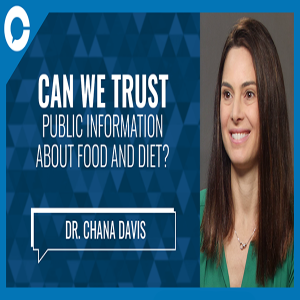
Coffee is good for you. No wait, it’s bad for you. Red wine? Well yes, it’s good for you. No, it’s not! Yes it is! Everywhere you look, there is a new study, a new opinion and a new fad about health – so many of them that it is extremely difficult to know which study or person you can trust.
Dr Chana Davis says, “You need to be very careful about whom you trust. Check the source, check the funder and determine if the research is peer reviewed.” Davis goes on to suggest that you double-check the findings: “Who else agrees? Does the WHO agree? What about the Canada Food Guide? And what does Pubmed.gov have to say?”
It’s easy to get swept up in the hype around diets. Your aunt, your uncle, and your mother’s best friend may all have lost weight on a low carb or high protein diet. Davis says, “While that may be true, you don’t know why. It may have been strict adherence to the plan. It could have been their particular metabolic make up.” In other words, anecdotal evidence isn’t enough to make an informed decision about a diet.
We invited Dr Davis to join us for a Conversation That Matters about where to find trustworthy information – one place for sure is on her new video podcast show Get Real Health on YouTube.
Dr Davis also suggests you check in with these organizations. Disease organizations (like Diabetes Canada, Diabetes UK, Heart & Stroke Foundation) Clinical care organizations (e.g. Mayo Clinic, Harvard Health) Public health organizations (e.g The World Health Organization, UK National Health Services) Dr Chana Davis obtained her PhD in genetics from Stanford University, and spent the first decade of her career in cancer research and personalized medicine (https://www.gene.com / https://www.genomebc.ca / https://www.canaryfoundation.org ).
In 2018, she founded Fueled by Science as a platform to help others get science-based answers to questions about diet and health. Check it out at https://fueledbyscience.com or search @fueledbyscience on Instagram, Facebook, and Twitter. ---
Simon Fraser University’s Centre for Dialogue presents Conversations That Matter. Join veteran broadcaster Stuart McNish each week for an important and engaging Conversation about the issues shaping our future. Please become a Patreon subscriber and support the production of this program, with a $1 pledge https://goo.gl/ypXyDs This show is produced by Oh Boy Productions, video production, podcast and vidcast specialists located in Vancouver. To find out more, go to http://www.ohboy.ca

Tuesday Feb 25, 2020
Tuesday Feb 25, 2020
Ep 282 Love Avoidance
Guests: Areej Siddiqui
“She loves me, she loves me not, he loves me, he loves me not” is a game played by someone while plucking petals off of a flower. The petal supposedly represents the truth between the object of their affection loving them or not.
On Valentine’s Day, it’s not unusual to want to know you are loved and that you do love. However, as family and couples therapist Areej Siddiqui says, “Love is not always embraced by everyone. In fact, there are people who are love avoidant.” In other words, they choose to remain single.
The factors are complex but are linked to the primary caregiver early in life. Siddiqui says, “There may have been a negative relationship; there may have been a smothering relationship; there may have been an emotionally vacant relationship.” All are factors that could lead a child to be reluctant, suspicious or afraid of intimacy.
We invited Areej Siddiqui to join us for a Conversation That Matters about love, our need to connect and how to get past avoidance.
Conversations That Matter is a partner program for the Morris J Wosk Center for Dialogue at Simon Fraser University. The production of this program is made possible thanks to the support of the following and viewers like you.
Please become a Patreon subscriber and support the production of this program, with a $1 pledge https://goo.gl/ypXyDs
Tuesday Feb 25, 2020
Tuesday Feb 25, 2020
Ep 281 Governing in the Name of Public Interest
Guests: Baldev Gill - Darin Germyn
In his series “Better Boards for Better Communities,” Ken Haycock points out that not-for-profit boards of directors play a foundational role in the communities they serve. Boards, he says, “help to define the strategic direction and purpose of the organizations they oversee.”
Recent changes in governance standards require almost the same degree of accountability for nonprofit boards as businesses, so it makes sense for nonprofit boards to be diverse and to take their responsibilities just as seriously.
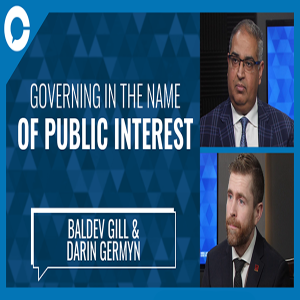
It’s an important process and one we rarely get to see at work. The Fraser Valley Real Estate Board’s President, Darin Germyn, recently suggested a Conversation That Matters about some of the challenges his Board faces in changing its by-laws saying, “We are willing to spell out the challenges for all to consider”.
CEO Baldev Gill said, “We’re willing to be transparent and share the process of bringing our bylaws into line with current protocols.”
In this episode of Conversations That Matter, the CEO and Board President of the FVRB join me to dig into the process of changing a bylaw and why it matters to members and, most importantly, the public at large.
Conversations That Matter is a partner program for the Morris J Wosk Center for Dialogue at Simon Fraser University. The production of this program is made possible thanks to the support of the following and viewers like you.
Please become a Patreon subscriber and support the production of this program, with a $1 pledge https://goo.gl/ypXyDs
Tuesday Feb 04, 2020
Tuesday Feb 04, 2020
Ep 280 UNDRIP
Guest: Ellis Ross
On November 26, 2019 ,the government of the Province of British Columbia introduced legislation aimed at adopting the UN Declaration on the Rights of Indigenous People (UNDRIP). The stated purpose is to ensure that all laws in BC affirm the rights of indigenous peoples.
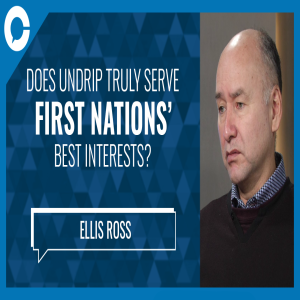
When introduced, it was celebrated on both sides of the house as a significant step forward. Bill 41 - 2019 passed unanimously with a caveat, that being concerns voiced in the house by Ellis Ross, the Liberal MLA for Skeena and a former Chief Councillor for the Haisla First Nations.
In the House, Ross questioned the meaning of the declaration’s guarantee of “free, prior and informed consent” to First Nations over land and resource development within their traditional territories and the need to introduce the legislation.
Ross asked, “If there are two parties at the table (First Nations and the Crown), and the First Nation doesn’t agree, what happens?... Does the Crown still go ahead and make a decision based on the interests of BC as a whole? Or do they just withhold their decision? Making no decision is still a decision.” Ross went on to ask, “Isn’t that a form of veto?”
We invited Mr. Ross to join us for a Conversation That Matters about UNDRIP, what it means, its implications and the path forward. This is the first in a series of more than 10 conversations that we recorded at the “Finding a Path to Shared Prosperity Conference” in mid-January that you can find on the Conversations That Matter YouTube channel.
Conversations That Matter is a partner program for the Morris J Wosk Center for Dialogue at Simon Fraser University. The production of this program is made possible thanks to the support of the following and viewers like you.
Please become a Patreon subscriber and support the production of this program, with a $1 pledge https://goo.gl/ypXyDs
Tuesday Feb 04, 2020
Tuesday Feb 04, 2020
Ep 279 Government of Canada Climate Scientist explains Climate Part 2 of 2
Guest: Greg Flato
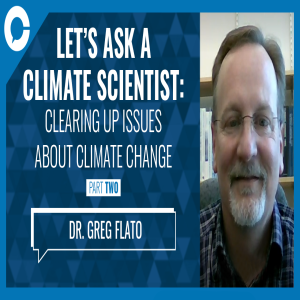
In part two of my conversation with Environment Canada Climate Scientist Greg Flato we discuss the dynamics of co2 in the troposphere, the tropopause and the stratosphere. Carbon in one layer of the atmosphere has a completely different effect on the admission and containment of heat from the sun than in the other.
We dig into the various greenhouse gases, for example did you know that by far and away water vapour is number one followed by co2 and methane or natural gas. We also discuss the fascinating make up of methane or natural gas which has been labelled as the cleaner greenhouse gas but isn’t true. In fact natural gas is 20 times more effective than co2 as a greenhouse gas. The saving grace is that there is considerably less methane than co2 being used to produce energy.
Most importantly this conversation concludes on a positive note, Mr Flato, like climate scientist Simon Donner, is optimistic that collectively we will find solutions to the climate challenges we face.
Here now is part two of my Conversation That Matters with Environment Canada Climate Scientist Greg Flato.
Conversations That Matter is a partner program for the Morris J Wosk Center for Dialogue at Simon Fraser University. The production of this program is made possible thanks to the support of the following and viewers like you.
Please become a Patreon subscriber and support the production of this program, with a $1 pledge https://goo.gl/ypXyDs
Tuesday Feb 04, 2020
Tuesday Feb 04, 2020
Ep 278 Micro Mobility
Guest: Paul Dragan
In a world of climate change, the bicycle is playing a vital role in reshaping the way people get around in dense urban environments. Micro mobility refers to a host of small (mostly two-wheeled) alternatives to cars and commercial vans.
The pressure this transformation is putting on cities that, for the past 70 years, were designed to accommodate automobiles is increasing. Bikes, mopeds, skateboards, scooters and pedestrians are demanding more and more of the available space. The conflicts are inevitable.
Automobile drivers who pay the majority of the taxes that pay for the byways of our cities are being relegated to second-class citizens. I recently heard car drivers described as the new smokers. As in, yuck, you drive a car!
Local governments are challenged on how to build the appropriate spaces for this onslaught of traffic that frequently spills out of its designated lane and into the path of cars, buses and trucks.
Bike theft is a huge issue that stops many from cycling to and from work. The more bikes there are, the more they get stolen. Bicycles are the perfect item to fence for quick cash. We are at a collision point: car bike tension, rules of the road and theft. These issues will need to be addressed if we hope to get more people out of cars.
We invited Paul Dragan, the Big Wheel at Reckless Rider, to join us for a Conversation That Matters about the transportation transformation that is reshaping our cities.
Conversations That Matter is a partner program for the Morris J Wosk Center for Dialogue at Simon Fraser University. The production of this program is made possible thanks to the support of the following and viewers like you.
Please become a Patreon subscriber and support the production of this program, with a $1 pledge https://goo.gl/ypXyDs
Tuesday Feb 04, 2020
Tuesday Feb 04, 2020
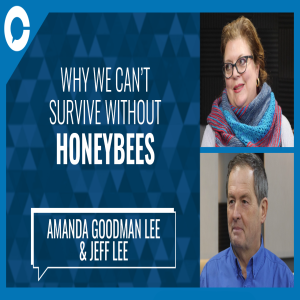
Ep 277 Are Honey Bees the Canary in a changing environment?
Guest: Amanda and Jeff Lee
Honeybees are a foundation species; without them, our food supply diminishes. When bees die, the outcome reaches right inside everything that is on your plate when you sit down to eat. If bees can’t or don’t pollinate, then you don’t eat and neither do the other animals in the food chain.
Colony collapse disorder is the term given to hives that lose the majority of the worker bees, leaving behind a queen – plenty of food, but only a few nurse bees to care for the remaining immature bees.
From 2007 through to 2013, more than 10 million bee colonies around the world were lost to colony collapse disorder. There are several possible causes for CCD that include pesticides, infections, pathogens, changing climate and environments and the introduction of neonicotinoids.
And then there is the honey. Nature’s nectar which in its pure, raw form is a delicious natural sweetener. The key to buying good honey, as you will hear, is to know your honey bee farmer.
We invited beekeepers Amanda and Jeff Lee of Swan Valley Honey to join us for a Conversation That Matter about the intricate relationship we have with pollinators who ensure we all can enjoy a plentiful and delicious diet.
Conversations That Matter is a partner program for the Morris J Wosk Center for Dialogue at Simon Fraser University. The production of this program is made possible thanks to the support of the following and viewers like you.
Please become a Patreon subscriber and support the production of this program, with a $1 pledge https://goo.gl/ypXyDs