

48.8K
Downloads
555
Episodes
Beyond the Headlines, an in-depth, one on one conversation on the issues shaping our future.
Episodes
Tuesday Feb 05, 2019
Tuesday Feb 05, 2019
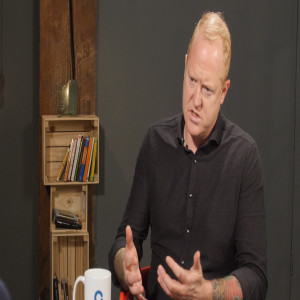
Ep 227 Nikolas Badminton
The Future
There is an adage that warns against making predictions, especially if they have anything to do with the future. It’s a fun way to protect yourself against unforeseen factors that can change the course of history and quickly.
The benefit of science and data research is we can see and document current trends. There people, like futurist Nik Badminton, who study that information and project potential outcomes. The predictions have been remarkably accurate. Nikola Tesla predicted Wi-Fi in 1909, Jules Verne foresaw a man on the moon back in 1865, and what about Ray Bradbury? He foretold of earbuds in 1953, and Edward Bellamy envisioned debit cards way back in 1888.
Even still, few envisioned the world we live in today – well, except for Gene Roddenberry, who envisioned the communicator and tricoder and warp drives and the granddaddy of them all, the “Beam Me Up, Scotty” transporter.
That begs the question: what is in the near future for us? We invited futurist Nik Badminton to join us for a Conversation That Matters about the ways in which our world will change in a radical and creative ways.
Simon Fraser University’s Centre for Dialogue presents Conversations That Matter. Join veteran Broadcaster Stuart McNish each week for an important and engaging Conversation about the issues shaping our future.
Please become a Patreon subscriber and support the production of this program, with a $1 pledge https://goo.gl/ypXyDs

Tuesday Feb 05, 2019
Tuesday Feb 05, 2019
Ep 226 Dr Richard Beamish
The Secret Lives of Pacific Salmon
For more than 100 years, scientists in BC have been researching salmon. The data banks are filled with information about spawning, spawning grounds and the forces that affect the environment where salmon return after their journey out to sea.
Researchers know the impact of freshwater and near shore factors on survival rates of smolts that are setting out on the journey into the Pacific Ocean. Phytoplankton and zooplankton are the food base when in abundance, allowing salmon smolts to fatten up and mature in advance of the long voyage ahead.
Then there are the predators – seals, sea lions, orcas and blue herons, to name but a few – that rely on salmon as the staple of their diet. Add in algae blooms and it’s a wonder any salmon survive.
What scientists now know is that of the millions of eggs that are fertilized, the survival rate has dropped from four on average percent 100 years ago to one percent today.
What those same scientists still don’t know is what are the factors that ensure or compromise the salmon’s survivability during their first winter at sea. That’s about to change. 19 scientists from five Pacific Rim countries are heading into the Gulf of Alaska to start work on a project that may finally shed light on the factors that support or hinder the lives of salmon.
We invited marine scientist Dr Richard Beamish to join us for a Conversation That Matters about the next step forward in understanding where our beloved salmon go and what we can do to help ensure their survival.
Simon Fraser University’s Centre for Dialogue presents Conversations That Matter. Join veteran Broadcaster Stuart McNish each week for an important and engaging Conversation about the issues shaping our future.
Please become a Patreon subscriber and support the production of this program, with a $1 pledge https://goo.gl/ypXyDs

Saturday Jan 12, 2019
Saturday Jan 12, 2019
Ep 224 Ron Bremner
Building Companies of Value
According to the Business Development Bank of Canada, the coming decade will belong to employees. The laws of supply and demand will put employees in charge of who they will work for, that’s because there will be more jobs than appropriate talent. Companies will be in search of talented staff.
The most effective way to attract the best and brightest will be to provide a workplace that embraces and stays current with technology, are socially and environmentally responsible, are inclusive, that produce goods and services of value and have built a corporate culture that supports and celebrates the team.
These concepts have been floating around for more than a decade. In principle, they make sense – making them a reality within your company is another matter. The guidebook is still being written.
We invited Executive Coach Ron Bremner to join us for a Conversation That Matters about the role of leadership in building and sustaining a corporate culture for the 21st century.
Simon Fraser University’s Centre for Dialogue presents Conversations That Matter. Join veteran Broadcaster Stuart McNish each week for an important and engaging Conversation about the issues shaping our future.
Please become a Patreon subscriber and support the production of this program, with a $1 pledge https://goo.gl/ypXyDs
Sunday Dec 23, 2018
Sunday Dec 23, 2018
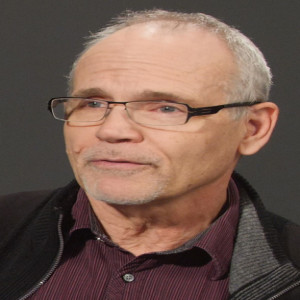
Ep 222 Max Reimer
Live Theatre Lives On
Live theatre is an emotive experience; it has the power to lift you up and pull you down. Done well, it draws you in and engulfs you. There is a relationship between you as a member of the audience and the cast – a relationship that is built immediately. Sometimes it is electrifying and at others it is cold. Either way, it is palpable.
Because the audience is always changing, the dynamics in the theatre change each and every night. Each audience ensures each night will produce a different performance. Live theatre coaxes you; sometimes it demands that those in attendance rise above the mundane and enter an experience that hopefully becomes something new for the audience and the cast.
Canadian theatre companies are producing exceptional new works by Canadian writers. They continue to innovate; they’re opening theatres in the far North staging Inuit productions; rural theatres staging summer productions that reflect the places they call home; technology is enhancing and expanding the stage. In Vancouver, Calgary, Edmonton and especially Winnipeg, big bold productions are opening to eager audiences.
We invited Max Reimer, the past artist and managing director of the Vancouver Playhouse Theatre Company, to join us for a Conversation That Matters about the experience of live theatre and why it will never die – why it must never die.
Simon Fraser University’s Centre for Dialogue presents Conversations That Matter. Join veteran Broadcaster Stuart McNish each week for an important and engaging Conversation about the issues shaping our future.
Please become a Patreon subscriber and support the production of this program, with a $1 pledge https://goo.gl/ypXyDs
Sunday Dec 23, 2018
Sunday Dec 23, 2018
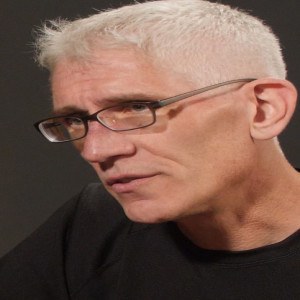
Ep 221 Corey Nislow
Living Organ Donation: A Donor’s Story
Giving – what does it mean to really give? One definition is to freely transfer possession to another. As a concept, it’s relatively easy to do. I have something and I choose to give it to you. I have a glass of water and you are thirsty. If I don’t need the water to satisfy my thirst, giving it to you is easy.
If I need the water, however, because I’m parched, giving you the water becomes a bigger issue. Do I share it? Do I keep it? Do I really want to give it to you? And if I do give it to you, what is my motivation? Do I really care about you or does giving you the water make me feel good about myself?
A glass of water is one thing; now consider giving a body part when you are still alive and may need it in the future. If it is a loved one and your organ is compatible, it’s possible to imagine doing so. We regularly hear of siblings or other family members donating an organ.
But what about an anonymous organ donation? That is a true act of giving, we invited Corey Nislow, who did just that, to join us for a Conversation That Matters about giving the gift of life.
Simon Fraser University’s Centre for Dialogue presents Conversations That Matter. Join veteran Broadcaster Stuart McNish each week for an important and engaging Conversation about the issues shaping our future.
Please become a Patreon subscriber and support the production of this program, with a $1 pledge https://goo.gl/ypXyDs
Sunday Dec 23, 2018
Sunday Dec 23, 2018
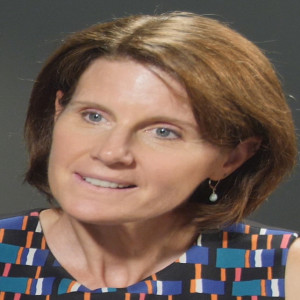
Ep 220 Lara Boyd
The Leading Cause of Death in Women
Imagine this: someone grabs their chest and collapses from a heart attack. What did you envision? Did you imagine a middle aged overweight guy? Probably! Did you for even a nanosecond image a woman? Probably not!
Why didn’t you imagine a woman? Well, let’s face it, we’re sexists when we think about heart attacks and strokes – we think it’s a male problem.
As a result of that stereotyping, heart disease research has focused primarily on men. The other side of that stereotyping is that women are not as vulnerable to heart disease. That, however, is simply not true.
Heart disease is an equal opportunity affliction that manifests itself differently in women than it does in men. So not only has female heart disease been under-researched, it is also frequently misdiagnosed and women are over-dying as a result.
Dr Lara Boyd, of the Centre for Brain Health says this misconception has created a gap in how women are treated when they complain of symptoms and there is a chasm in the amount of research devoted to women’s cardiovascular health.
We invited Dr Boyd to join us for a Conversation That Matters about the facts and myths of heart disease and women and where we go from here.
Simon Fraser University’s Centre for Dialogue presents Conversations That Matter. Join veteran Broadcaster Stuart McNish each week for an important and engaging Conversation about the issues shaping our future.
Please become a Patreon subscriber and support the production of this program, with a $1 pledge https://goo.gl/ypXyDs

Sunday Dec 23, 2018
Sunday Dec 23, 2018
Ep 219 Marco Marra
The Legacy of Nobel Laureate Michael Smith
It was 25 years that the Nobel committee named Dr Michael Smith of UBC as the winner in chemistry. It’s a prize he won for his work in site-directed mutagenesis. In other words, a process of making specific changes to the DNA sequence of a gene – a process that Dr. Smith developed in advance of the mapping of the human genome.
He was a remarkable scientist and a remarkable man who went to great lengths in attracting research talent to BC. He donated the entire prize money he was awarded to future research and, in doing so, he played a vital role in establishing BC as a centre of excellence in genome research.
His generosity of spirit coupled with his financial contribution has inspired the creation of Genome BC, the Michael Smith Foundation for Health Research, the Michael Smith Laboratories at UBC and the Michael Smith Genome Sciences Centre at BC Cancer.
The Nobel Prize and Dr Smith’s commitment to using his position to advance research in BC research was a game changer, one that vaulted local scientists onto the world stage and put British Columbia on the map as a place of world class research.
We invited distinguished scientist Marco Marra, the Director of Canada’s Michael Smith Genome Sciences Centre at the BC Cancer Agency, to join us for a Conversation That Matters about the remarkable legacy of Dr. Michael Smith.
Simon Fraser University’s Centre for Dialogue presents Conversations That Matter. Join veteran Broadcaster Stuart McNish each week for an important and engaging Conversation about the issues shaping our future.
Please become a Patreon subscriber and support the production of this program, with a $1 pledge https://goo.gl/ypXyDs
Sunday Dec 23, 2018
Sunday Dec 23, 2018
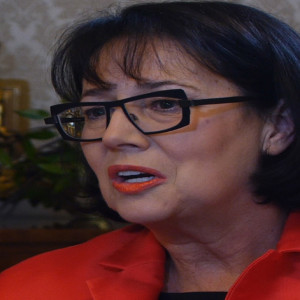
Ep 218 Janet Austin
Her Majesty’s Representative in British Columbia
No matter which type of government you live under in 15 of the Commonwealth nations that recognize the Queen of England as their monarch, there is a Governor General nationally and a Lieutenant Governor regionally. The role is that of de facto head of state – it’s primarily ceremonial until it isn’t.
In the 2017 British Columbia provincial election, you will recall the Liberals won 43 seats, the NDP won 41 and the Green Party won 3 seats. Here’s where the Lieutenant Governor transitioned from a ceremonial role to a formal one – one that determined the outcome of the election.
The LG at the time was Judith Guichon and she became the final vote in the 2017 election. Former Premier Christy Clark asked the LG to let her form a government with a party that was one seat short of the majority needed. Ms. Guichon turned down the request and offered Opposition Leader John Horgan, who in an alliance with the Green Party represented a majority, to form a government.
In March of 2018 Janet Austin, the former CEO of the YWCA was asked to take over the role: a position you cannot apply for, a demanding position that requires the LG’s presence on behalf of the government throughout the province. As LG, Ms Austin reports to the Queen.
We invited BC’s Lieutenant Governor Janet Austin to join us for a Conversation That Matters about the role of the Queen’s representative in British Columbia and the objectives she has set for her term.
Simon Fraser University’s Centre for Dialogue presents Conversations That Matter. Join veteran Broadcaster Stuart McNish each week for an important and engaging Conversation about the issues shaping our future.
Please become a Patreon subscriber and support the production of this program, with a $1 pledge https://goo.gl/ypXyDs
Saturday Nov 10, 2018
Saturday Nov 10, 2018
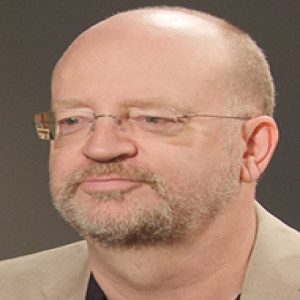
Ep 216 Bill Tieleman
Proportional Representation - Part 1 - No
For the third time in the past 15 years, British Columbians are participating in a referendum to change the way the people of the province elect a government. In 2005, the Single Transferable Vote (or STV) was put to the people in a referendum that ran concurrently with the provincial election.
The referendum required a super-majority that included approval of 60% of the voters overall and simple majorities in 60% of the 79 districts in order to pass. It fell short of the required 60% overall by an extremely slim margin. Four years later, STV was soundly defeated.
The current government says it’s time to revisit proportional representation. It has scrapped the STV method and is providing voters with four options, with a 50 plus 1 threshold to pass. The first is to simply keep the current system.
If, however, you think it’s time to change the way we elect the people who govern the province, you are then asked to rank your pick from three options. Bill Tieleman of the No BC Proportional Representation Society is adamant that the referendum proposal is a bad idea. He campaigned against it in ‘05, in ‘09, and he’s once again warning voters against proportional representation.
We invited Bill Tieleman to join us for a Conversation That Matters about the case for No when it comes to proportional representation.
Simon Fraser University’s Centre for Dialogue presents Conversations That Matter. Join veteran Broadcaster Stuart McNish each week for an important and engaging Conversation about the issues shaping our future.
Please become a Patreon subscriber and support the production of this program, with a $1 pledge https://goo.gl/ypXyDs
Saturday Nov 10, 2018
Saturday Nov 10, 2018
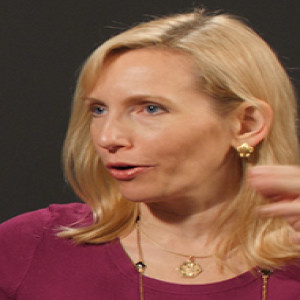
Ep 215 Nicolee Ambrose & Marc Hetherington
Understanding American Viewpoints on Socio-Economic Issues
In 2016, as Americans went to the polls, the top voting issues for Republicans were the economy, terrorism, immigration, foreign policy and health care. Democratic voters rallied around the economy and terrorism as well. However, their point of view on those topics differed significantly from GOP supporters. The other top Democratic issues were racial mistreatment, gun control and the environment.
Two years into the Trump administration, Americans are heading into midterm elections. The results could shift the balance of power in both the House and the Senate. Currently the Republicans hold the balance of power in both chambers.
What issues are American voters wrestling with currently? The economy appears to be on fire, terrorism is slipping from the headlines. Trump has taken on China, Europe, Canada and Mexico in trade and he is getting much of what he wanted. He has already appointed two judges to the Supreme Court.
So, what next? What issues are front and centre? Crime, the unequal distribution of wealth, poverty, access to education and health care, along with the rising cost of living all are ever present. But are they the lightning rod issues that will tip the results of an election?
We invited both Nicolee Ambrose, the newly elected Republican National Committeewoman, and Marc Hetherington, a political scientist at the University of North Carolina, to join us for a Conversation That Matters about the issues they say will play important roles in how Americans cast their ballots this November.
Simon Fraser University’s Centre for Dialogue presents Conversations That Matter. Join veteran Broadcaster Stuart McNish each week for an important and engaging Conversation about the issues shaping our future.
Please become a Patreon subscriber and support the production of this program, with a $1 pledge https://goo.gl/ypXyDs