
48.7K
Downloads
555
Episodes
Beyond the Headlines, an in-depth, one on one conversation on the issues shaping our future.
Episodes

Friday Nov 03, 2017
Friday Nov 03, 2017
Shipping on our Coastal Waters
Every year the Western Canada’s gateway generates over 21 billion dollars in economic activity.
Each year thousands of ships transit BC’s Coastal waterways bringing cargo in and taking it out. The new Oceans Protection Plan lays out a number of issues the Federal Government is requiring the shipping industry to meet.
Tougher regulations that require working with First Nations and Indigenous Communities to identify environmentally sensitive areas of cultural, social and economic importance. Stronger polluter pay principles, identification of safe refuge sites, 24 - 7 emergency response and the continued modernization of the ship pilot regime.
And then there is the impact of shipping on the Southern Resident Whale Population. Does the underwater noise generated by ships play a large role in preventing Orcas from identifying the location of the Chinook Salmon that is the staple of their diet?
The BC Chamber of Shipping and it’s members participated in the Port Metro ECHO program where ships reduced speed to 11 knots in Haro Strait in an effort to reduce ambient noise and better understand the relationship between speed, noise and the effects on killer whales.
Looming in the background is an increase in oil and LNG tanker traffic.
To discuss what the shipping industry is doing to meet these concerns, issues, and regulations we invited the President of the Chamber of Shipping, Robert Lewis-Manning to join us for a Conversation That Matters about protecting our coastal waters.
Simon Fraser University’s Centre for Dialogue presents Conversations That Matter. Join veteran Broadcaster Stuart McNish each week for an important and engaging Conversation about the issues shaping our future.
Please become a subscriber and support the production of this program, www.conversationsthatmatter.tv
Wednesday Oct 18, 2017
Wednesday Oct 18, 2017
Is the health and well-being of Howe Sound our canary in the coal mine?
For more than 30 years Vancouver Aquarium and other groups have been conducting research on the fjord that extends from West Vancouver to Squamish. It has housed pulp mills, a copper mine, been the gathering site for log booms and the output of sawmills.
Then in 1956 BC Rail completed its line to Squamish making it more accessible to industry and the people who lived and worked for the major employers that were extracting the resources from the land that borders the Sound.
By 1959 the Sea to Sky Highway had been completed and with it commerce grew, residential housing expanded and Whistler boomed. Each new development put pressure on the ecosystems that feed into Howe Sound.
Salmon, the Southern Resident Killer Whale population and the myriad organisms that make up the food chain all came under pressure.
With the closing of the Woodfibre Pulp Mill and Britannia Mine the impact from heavy industry was eased while at the same time urban expansion presents new challenges and new toxins entering Howe Sound.
Andrew Day the past Executive Director of the Coastal Ocean Research Institute which released its’ report card on Howe Sound joins us this week on Conversations That Matter to share what we know, where are the gaps in our understanding and what the well-being of the Sound means to the south coast and the Salish Sea.
Monday Oct 09, 2017
Monday Oct 09, 2017
Can you change the world through entrepreneurialism?
In other words, can business be an instrument of social change?
In his book ‘How to Change the World, David Bornstein profiles social entrepreneurs.
Men and women who are innovative, successful, grass-roots individuals who created businesses that address a wide range of social and economic problems.
As he puts it, “social entrepreneurs are creative, driven, and adventurous. The embrace change, exploit new opportunities, and think big.”
Social entrepreneurs can and do change their societies - AND the world - AND in doing so demonstrate that one person can make a difference.
Madeleine Shaw is one such person - she was concerned about the impact feminine hygiene products had on women and the environment and not to be overlooked, the cost.
Shaw and her business partner Suzanne Siemens created Lunapads, a company that provides better health products for people and the planet.
Lunapads are sold worldwide, as a result more than two million disposable pads and tampons are being diverted from landfills every month.
To talk about social entrepreneurialism, Lunapads and her latest social venture - Nestworks, we sat down with Madeleine Shaw for a Conversation That Matters.
Wednesday Oct 04, 2017
Wednesday Oct 04, 2017
Ep 159 - Dr. Evan Wood
It’s time for an entirely different approach to the drug crisis
The Opioid - Fentanyl crisis that is sweeping through Vancouver, the province and beyond is growing unabated. This week Conversations That Matter features Dr. Evan Wood of the BC Centre on Substance Use, says it’s time to completely re-examine our drug policies and our drug laws.
Simply put, he says prohibition hasn’t worked. He points to Opium as an example. It was the drug that ignited a trade war between Great Britain and China. Since then the transportation of the drug became restricted.
The production of heroin was the result because it was far easier to conceal, transport and avoid detection if the alkaloid morphine was extracted from the dried poppy and packaged in smaller bundles.
Fentanyl is one-thousand times more potent than morphine is the latest iteration in the make it small, more potent and harder to detect reaction to prohibition. Buried below the surface of detection these synthetic opioid analgesics enter the marketplace devoid of consumer protection.
And drug users with no intention of consuming fentanyl are at risk. The drugs are packaged in less than ideal locations, like a kitchen table. Once finished with fentanyl, the table may get a quick brush over which frequently leaves traces of the killer drug behind.
Then when the cocaine, the dealer is cutting gets dropped on the same table, grains of the deadly fentanyl can and often do get mixed in. The unsuspecting cocaine user snorts the white powder and the result can be and frequently is - deadly.
Wood suggests the establishment of labs available to pushers and users to determine the purity and potency of the drug will go a long way to reducing the fatal side effect.
Simon Fraser University’s Centre for Dialogue presents Conversations That Matter. Join veteran Broadcaster Stuart McNish each week for an important and engaging Conversation about the issues shaping our future.
Please become a subscriber and support the production of this program, www.conversationsthatmatter.tv
Thursday Sep 28, 2017
Thursday Sep 28, 2017
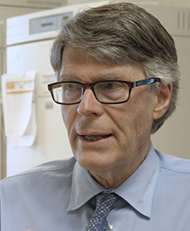
Ep 158 - Dr. Allen Eaves
At the Epicentre of Biotech
This week Conversations That Matter features the remarkable Dr. Allen Eaves, the founder, CEO and President of STEMCELL Technologies, Canada’s most successful biotech company. A firm that is playing a pivotal role in fostering a community of biotech startups. Eaves says, “we're very keen to support an ecosystem of biotechnology here and be closely related with the universities, especially UBC and SFU, and you know, this is my passion.”
STEMCELL Technologies has experienced year over year growth of 20% over the past quarter-century, Eaves predicts that will continue, “over the next 15 years we're going to be hiring 5,000 more people and our sales will be well over one billion dollars, and we'll be even more of a global company. At only 3% of our sales, the Canadian market is small.”
Not only is STEMCELL Technologies fostering growth and employing scientists, it is also playing a significant role in generating export sales, which Eaves points out “are worth two to three times the value of dollars generated within an economy. And so we're gonna continue to do this, and of course, I would like to see this evolve into supporting all the things we do in healthcare.”
Where does he go from here? For Eaves there are no limits, not only does he plan to work for the rest of his life, he plans to do so with gusto, “We are going for world domination and it's all working out nicely.”
Simon Fraser University’s Centre for Dialogue presents Conversations That Matter. Join veteran Broadcaster Stuart McNish each week for an important and engaging Conversation about the issues shaping our future.
Please become a subscriber and support the production of this program, www.conversationsthatmatter.tv

Thursday Sep 21, 2017
Thursday Sep 21, 2017
This week Conversations That Matter features Mark Milner of ICBC’s Road Safety Program, a program that is devoting more and more resources to discouraging distracted driving. It’s a fight Milner admits is challenging because “apps are designed to get your attention”. Unfortunately, the apps are playing a significant role in driving up accident rates. Milner says, “the average person touches their phone up to 2,000 times a day and the addicted user up to 5,000. This is a contributing factor to the number of fatal accidents associated with distracted driving. The numbers of fatalities exceed those associated with impaired driving and they’re close to speed-related deaths rates.”
ICBC says over the past five years close to 400 people have lost their lives due to distracted driving. The insurance company along with Police Forces throughout the province are clamping down with an increasing number of counter-attack programs. Unlike drinking driving roadblocks the police simply walk or cycle through a row of cars stopped at a red light. Much to their chagrin, they do not have to conceal who they are, drivers focused on their phones don’t see them coming. Fines for use of your phone when driving are $543 on the first infraction, another $368 if you get nabbed a second time and $3,000 if you get caught again within 12 months. After a second ticket, ICBC is going to review your driving record and could remove your driver’s license.
Simon Fraser University’s Centre for Dialogue presents Conversations That Matter. Join veteran Broadcaster Stuart McNish each week for an important and engaging Conversation about the issues shaping our future.
Please become a subscriber and support the production of this program, www.conversationsthatmatter.tv

Wednesday Sep 13, 2017
Wednesday Sep 13, 2017
This week Conversations That Matter features Laura Jones of the Canadian Federation of Independent Business who talks about the value small business contributes to the economy. Jones points out, “Over half the private sector jobs are in small business. So small businesses create jobs. But they do way more than just creating jobs. You know in an economic downturn, big businesses are really quick to shed jobs. Small businesses are not. They try and keep their employees. And what that does, is it creates a lot of economic stability.”
Jones goes on to address the proposed tax changes that will have a significant impact on small business. According to Jones, “small businesses are insulted by the tone that the Government is taking around these consultations. A tone that suggests small business people are trying to cheat on taxes.”
Conversations That Matter is a partner program with the Centre for Dialogue at Simon Fraser University. Join veteran Broadcaster Stuart McNish each week for these important and engaging Conversations shaping our future.
Please become a subscriber and support the production of the program at www.conversationsthatmatter.tv

Sunday Sep 10, 2017
Sunday Sep 10, 2017
This week Conversations That Matter features Jane Bird who as CEO of the Canada Line Rapid Transit Inc, the company that planned, built and figured out how to pay for the public transit line to Richmond and the airport. How did she do it? What can we learn from her experience as we tackle transportation infrastructure planning in the GVRD?
Rule number one according to Bird is, “people need to feel like it's fair. They need to feel like it's reasonable for me to have to pay this. It’s not fair if one person pays to drive to on the road work and another drives in for free.” She goes on to say, “if users are paying for something they want to know it is an investment in better service, people need to feel that, bottom line, they need to understand why. If we can demonstrate that, then we have a shot at social license.”
Conversations That Matter is a partner program with the Centre for Dialogue at Simon Fraser University. Join veteran Broadcaster Stuart McNish each week for these important and engaging Conversations shaping our future.

Friday Sep 01, 2017
Friday Sep 01, 2017
Ep 154 - Barinder Rasode
Is Canada ready for legal pot?
This week Conversations That Matter features Barinder Rasode of NICHE an organization that is playing a role in helping producers, regulators, police and provincial governments get ready for the biggest social change since the abolition of prohibition. Rasode says, “there is a need for greater collaboration between governments, industry and the public.”
With less than 11 months before pot become legal is Canada ready? The answer is, probably not and there will be mistakes. Provincial Governments across the country are already telling Ottawa it is moving too fast. Radose acknowledges there is push back from the provinces but says, “It will take time for all of the pre-prohibition market to move into the post-prohibition market and to be properly regulated, checked by health authorities and municipal licensing bylaw officers but it is possible. The important thing is this was the right time for use to move forward with legalizing cannabis.”
Conversations That Matter is a partner program with the Centre for Dialogue at Simon Fraser University. Join veteran Broadcaster Stuart McNish each week for these important and engaging Conversations shaping our future.
Please become a subscriber and support the production of the program at www.conversationsthatmatter.tv
Wednesday Aug 23, 2017
Wednesday Aug 23, 2017
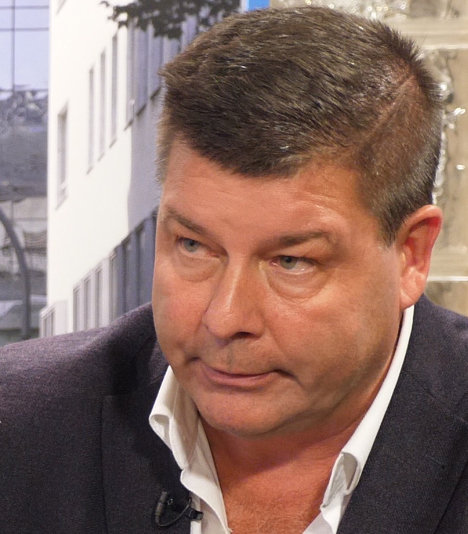
Ep 153
Is Omar Khadr a victim or a terrorist?
This week Conversations That Matter features Scott Taylor, a former Canadian Armed Forces Commando, former Ansar-al-Islam hostage and the founder of Esprit de Corps Magazine on Omar Khadr. Is Mr. Khadr a terrorist or a victim? In a recent Blog, Scott Taylor says he is a victim.
The details of Mr. Khadr’s life, his battlefield engagement, the extraordinary efforts that saved his life only to ensure he was taken to Bagram Air Force Base and to the Guantanamo Bay detention camp. A facility Amnesty International says operates without regard for human rights, a facility that employed an interrogation technique commonly referred to as, “the frequent flyer program”. The evidence of torture and a disregard for human rights did not sway successive Prime Ministers to ask for Mr. Khadr’s return to Canada. Scott Taylor says, “This is where the Canadian government failed.”
Conversations That Matter is a partner program with the Centre for Dialogue at Simon Fraser University. Join veteran Broadcaster Stuart McNish each week for these important and engaging Conversations shaping our future.
Please become a subscriber and support the production of the program at www.conversationsthatmatter.tv