
53K
Downloads
555
Episodes
Beyond the Headlines, an in-depth, one on one conversation on the issues shaping our future.
Episodes
Mar 21, 2018
Mar 21, 2018
23 min
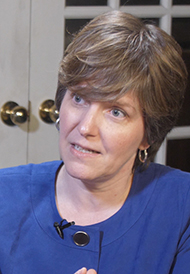
Catalina Lopez-Correa
Genomic Research in BC Gets a Huge Boost
Genomics is changing lives, it is reshaping economies and shifting health outcomes. British Columbia is at the leading edge in the implementation of genomic research and in practice.
The role of that research in BC took a big leap forward when six new projects in precision health care were awarded more than 60 million dollars in funding. Funding that helps establish British Columbia as a genomics-driven life sciences supercluster.
Precision health care is shifting the way we interact with our health, medical practitioners and the healthcare system. Utilizing genomics, we can diagnose potential health threats in advance and guide treatments that are specific to individuals like you and me.
Already, the BC Pharmacy Association is employing Pharmacogenomics to ensure you receive the right medication in the right dose at the right time. It doesn’t stop there, treatment for childhood diseases in indigenous populations and pharmacogenomics in childhood cancer treatment are two of the funded projects.
The investment is a validation of the extraordinary genomic research underway in BC.
We asked Genome BC Chief Science Officer Catalina Lopez-Correa to join us for a Conversation That Matters about how genomics is reshaping our lives.
Simon Fraser University’s Centre for Dialogue presents Conversations That Matter. Join veteran Broadcaster Stuart McNish each week for an important and engaging Conversation about the issues shaping our future.
Please become a Patreon subscriber and support the production of this program, with a $1 pledge https://goo.gl/ypXyDs
Mar 18, 2018
Mar 18, 2018
23 min
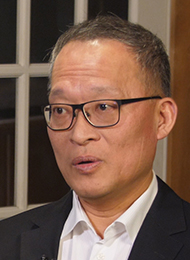
Dr David Wang
The Ugly Truth about Supplements
Supplements - do you take them?
If you do, it’s probably because you want to be healthier. And if you take supplements there’s a good chance you pay attention to the food you buy and eat. More and more of us are turning to organic foods because we care about what we consume.
We’re doing a good job of checking labels to determine if foods have GMO’s, what are the additives in them, what is the nutritional value of the delicious meal you’re about to eat?
But do you examine the ingredients in the supplements you’re tossing back with a smoothie? Do you have any idea what’s in those gel caps, tablets and liquids?
If you take the time to read the label and examine the elements and then do the work of understanding what they are, you might very well be shocked to learn it’s a mixed bag.
We asked Dr David Wang to join us for a Conversation That Matters about why you need to be just as picky about nutraceuticals as you are about the food you eat.
Simon Fraser University’s Centre for Dialogue presents Conversations That Matter. Join veteran Broadcaster Stuart McNish each week for an important and engaging Conversation about the issues shaping our future.
Please become a Patreon subscriber and support the production of this program, with a $1 pledge https://goo.gl/ypXyDs
Mar 8, 2018
Mar 8, 2018
23 min
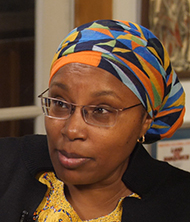
Alice Wairimu Nderitu
Peace through Dialogue
In an armed conflict, the only path to peace is through dialogue.
As National Chief of the Assembly of First Nations, Perry Bellegarde points out dialogue leads to relationships and it is through relationships that we can build anything.
Alice Nderitu knows this better than anyone else. Ms Nderitu is an armed conflict mediator. She has mediated more than 90 processes that have resulted in peace agreements between parties that are at war with each other in Kenya and Nigeria.
Ms Nderitu is one of a few female peace negotiators active in Africa.
Key to her success is purposeful dialogue. Dialogue that demands preparation, time, patience concentrated effort and an open mind coupled with a fearless ability to say the things that need to be said.
We asked the Jack P Blaney Award Winner for Dialogue Alice Nderitu to join us for a Conversation That Matters about the path to peace through dialogue.
Simon Fraser University’s Centre for Dialogue presents Conversations That Matter. Join veteran Broadcaster Stuart McNish each week for an important and engaging Conversation about the issues shaping our future.
Please become a Patreon subscriber and support the production of this program, with a $1 pledge https://goo.gl/ypXyDs
Mar 1, 2018
Mar 1, 2018
23 min
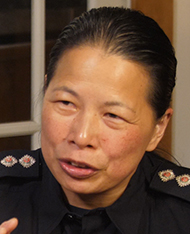
Ep 180 Inspector Colleen Yee
Women’s Personal Safety
Did you know that assaults against women are one of the few crimes that have not decreased in Metro Vancouver? And that women are most at risk while in transit from one destination to the next or at home?
Do you know what to do? Do you know how to reduce the likelihood of being a victim? Do you know what to do if you suspect you are in trouble and then what?
It’s a question a dedicated group of female officers with the Vancouver Police have answered. Once a month they conduct a Women’s Personal Safety workshop, for free and for women only. No male instructors, no male participants.
It’s a program that will arm you with vital information that will help you survive a violent attack be it at home or when you’re out in the city.
It’s a program filled with information you’ve never heard before. Information and easy to remember and easy to execute techniques that are incredibly effective.
We invited Inspector Colleen Yee of the Vancouver Police to join us for a Conversation That Matters about strategies that allow you to survive in the presence of mortal danger.
Simon Fraser University’s Centre for Dialogue presents Conversations That Matter. Join veteran Broadcaster Stuart McNish each week for an important and engaging Conversation about the issues shaping our future.
Please become a subscriber and support the production of this program, www.conversationsthatmatter.tv
Feb 22, 2018
Feb 22, 2018
23 min
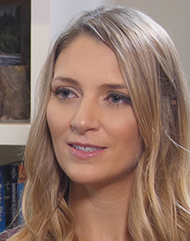
Emma Gilchrist
Democracy and Independent Media
Some newspapers dig.
Some newspapers are a constant embarrassment to the powerful.
Some manage to be entertaining, provocative and fair all at the same time.
There are few such newspapers in Canada.
That’s from a report written in 1970’s by the Special Senate Committee on Mass Media. Were they right then, are they right now?
Mainstream media tries to report all the news that’s fit to print, but the reality is it can only cover a handful of stories and its ability to dig deep has been hampered by shrinking budgets. Enter independent media outlets that are picking up the slack by taking on issues that fall outside the columns, airwaves and screens of traditional media.
In many cases, the journalists working for these outlets are some of the most tenacious diggers in the business. They take on specific issues and they do so from a particular point of view, peeling back the layers revealing what others have missed.
In the case of Site C, it was independent media outlet DeSmog Canada that uncovered facts about the controversial hydro project that everyone else missed. Once revealed, even the New York Times repeatedly cited the tiny online publication that is managed from a dining room table in Victoria.
We invited DeSmog Canada’s Editor-in-Chief, Emma Gilchrist to join us for a Conversation That Matters about the role of independent media in a democracy.
Simon Fraser University’s Centre for Dialogue presents Conversations That Matter. Join veteran Broadcaster Stuart McNish each week for an important and engaging Conversation about the issues shaping our future.
Please become a subscriber and support the production of this program, www.conversationsthatmatter.tv

Feb 22, 2018
Feb 22, 2018
22 min
Democracy & The Media: Crowdfunded Journalism
One of the challenges mainstream television faces is sameness. We’ve all scrolled through the listings and been presented with an endless array of programming that fits into advertiser supported shows.
Advertisers want to speak to as large and focused audience as possible. They have a product to sell and they want to place their product next to programming that appeals to a broad audience.
Therein lies the problem when it comes to the production of programming that challenges viewers to question their perspectives on big issues. Issues that lie at the heart of our society, globalization, human rights, equality, freedom of speech, freedom of faith, freedom to choose who they fall in love with, and free market economies.
In British Columbia, we’re fortunate to have a public broadcaster that operates free of influence from advertisers and bureaucrats, a truly independent voice offering a range of perspectives that challenge viewers to think and debate issues.
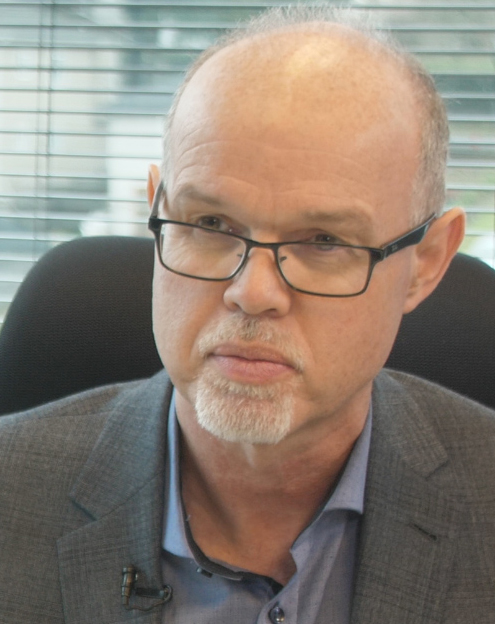
We invited Rudy Buttignol, Knowledge Networks President to join us for a Conversation That Matters about the role of independent television in a democracy.
Simon Fraser University’s Centre for Dialogue presents Conversations That Matter. Join veteran Broadcaster Stuart McNish each week for an important and engaging Conversation about the issues shaping our future.
Please become a subscriber and support the production of this program, www.patreon.com/conversationsthatmattter
Feb 9, 2018
Feb 9, 2018
22 min
Mainstream media is under attack. While Donald Trump may be the loudest voice in the assault he is not the most effective. That honour goes to Google and Facebook and Twitter and, and, and . . .
The impact of social media and search engines on advertising revenues is gutting mainstream media. There are more news outlets today and fewer journalists. More press releases and less reporting. Consolidation, generic mastheads along with cut and paste, mean politicians and public figures are getting a free pass.
The role of the media as a watchdog, an early warning system, is in jeopardy as budgets shrink. But, journalists are innovative, finding new ways of keeping public figures and institutions accountable.
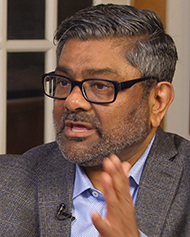
In the fifth instalment of our series on Democracy and The Media, we invited Harold Munro, the Editor-in-Chief of the Vancouver Sun, to join us for a Conversation That Matters about the role of mainstream media in a democracy.
Feb 3, 2018
Feb 3, 2018
22 min
Prime Minister Justin Trudeau likes to say, “Diversity is our Strength”
Is it? What does he mean when he says that and does diversity strengthen or diminish democracy? The answer is complicated, it starts with an open invitation to full participation in citizenship and a collective willingness to do the necessary work. Work that includes ongoing discussions about overarching values, ideals and goals such as human rights, justice, equality, individual freedom and access to opportunity.
Lost in the discussions pertaining to immigration and the acceptance of refugees is the responsibility of those of us who are already here to enlighten, inform and educate newcomers about what is expected of them as participants in society.
Together, and from within individual communities, we, yes, the royal we, need to share what is expected of citizens and landed immigrants, what it means to participate in democracy, what it means to be an informed voter.
So how are we doing here? Canada grants full access to participation, this we do well. We say we believe in diversity but we can’t stop there. We need to do a better job of educating and demonstrating that for our democracy to strengthen - everyone must embrace one another’s rights. And we must defend each other’s rights. If I have the freedom to express my opinion then I have an obligation to defend your right to do the same and so on.
Martin Luther King, writing from his jail cell in Birmingham Alabama said, We are caught in an inescapable network of mutuality, tied up in a single garment of destiny. Whatever affects one directly, affects all indirectly, This is reciprocity.
The Center for Multicultural Education at the University of Washington, Seattle, established a Diversity, Citizenship, and Global Education Consensus Panel. The Panel’s goal was to develop a set of design principles and concepts that develop or renew citizenship education programs that reflect both diversity and unity and that prepare people to become effective citizens in a global context.
We invited Zool Suleman, an immigration policy consultant and a powerful civil rights champion for immigrants and refugees to join us for a Conversation That Matters about Unity in Diversity.
Jan 25, 2018
Jan 25, 2018
22 min
Ep 175 Ujjal Dosanjh
Is Canada becoming more racist?
The discussion around race in the United States has turned nasty—build a wall, travel and immigration bans, deportations all aimed at keeping “others” outside of the country. Internally, tension between black Americans and police continues to escalate with deadly consequences. Latinos and Muslims are subject to one verbal or legal attack after another.
Then came the Charlotteville riots. The “Unite the Right” rally turned violent when a man rammed his car into counter-protester leaving one woman dead and dozens injured. A police helicopter monitoring the riot crashed, killing two police officers.
The President of the United States made matters worse when he refused to condemn the violence. The escalation of racial tension lead to white supremacist rallies across North America including one in Vancouver. It begs the question—are we following the United States and becoming more racist?
Former British Columbia Premier Ujjal Dosanjh says no, we are not. He points to the fact that, “racism has become Presidential in the U.S., but not Prime Ministerial in Canada.”
We asked Dosanjh to join us for a Conversation That Matters about racism in Canada.
Simon Fraser University’s Centre for Dialogue presents Conversations That Matter. Join veteran Broadcaster Stuart McNish each week for an important and engaging Conversation about the issues shaping our future.
Please become a subscriber and support the production of this program, www.conversationsthatmatter.tv
Jan 19, 2018
Jan 19, 2018
22 min
Ep 174 Adam Kahane
Collaborating With The Enemy
If living in a participatory democracy means getting involved, one of the first obstacles lying in wait is the other people, also wanting to participate, with different viewpoints that range from sympathetic to wildly controversial.
Dislike and distrust can run rampant. Arguments inevitably break out. Civil discourse turns into civil war with no solutions in sight. How then do you find the path toward solutions that benefit everyone? Traditionally it has been a top-down approach. Leaders go through the motions of listening to their constituents. Political agendas and special interest groups exert pressure to push ideologies, corporate needs, and profit margins. What we end up with is a complex system of legislation that takes a team of lawyers to understand. The average citizen is left frustrated and feeling like they cannot make a difference.
We also know it isn’t working well. Housing, jobs, homelessness, the opioid crisis, land claims and even traffic are being politicized. The solutions are messy, at times ineffective or worse, compound the problem.
What then? It's easy to point fingers and blame others, to find an enemy and fight against them. Adam Kahane, a conflict resolution specialist who has worked on seemingly intractable global crises such as the civil war in Columbia and the turmoil in Guatemala, points out we have to set aside the hierarchical approach and learn to accept that finding solutions requires a shift to collaborative thinking.
We asked Adam Kahane to join us for a Conversation That Matters about a model of collaboration with people whom we disagree which leads to outcomes that improve lives and meet the needs of the people who need solutions the most.
Simon Fraser University’s Centre for Dialogue presents Conversations That Matter. Join veteran Broadcaster Stuart McNish each week for an important and engaging Conversation about the issues shaping our future.
Please become a subscriber and support the production of this program, www.conversationsthatmatter.tv